

Sustainable barefoot shoes for children
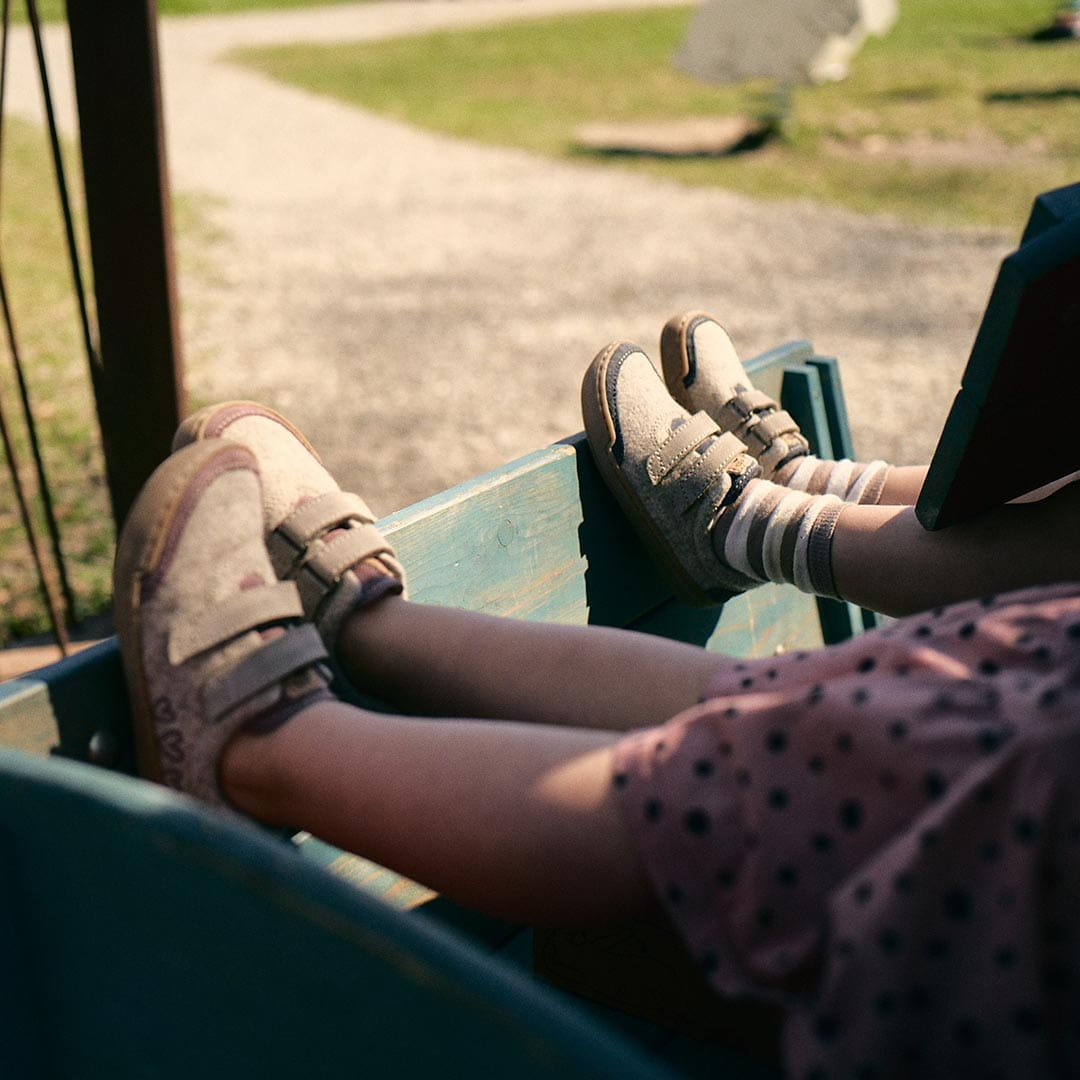
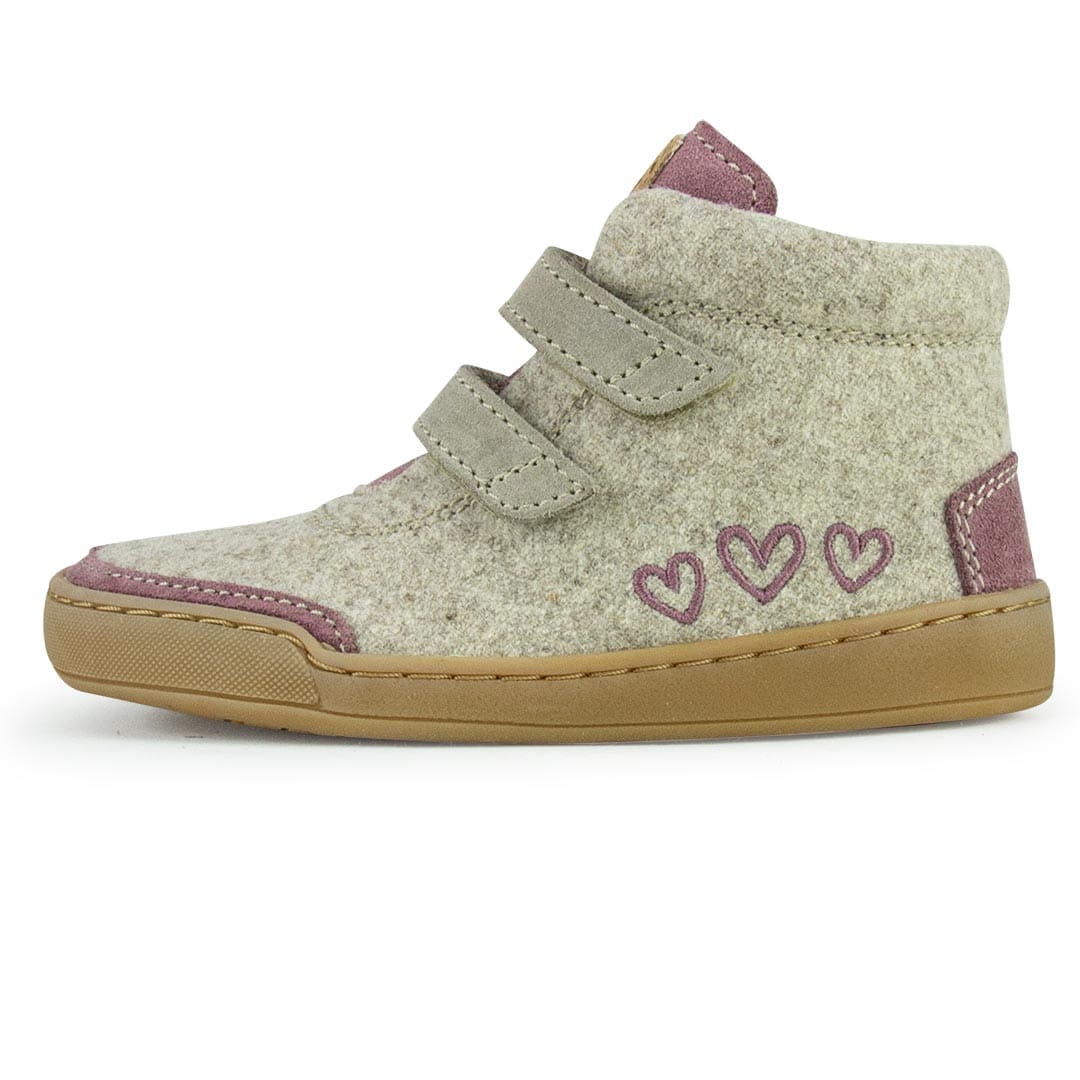
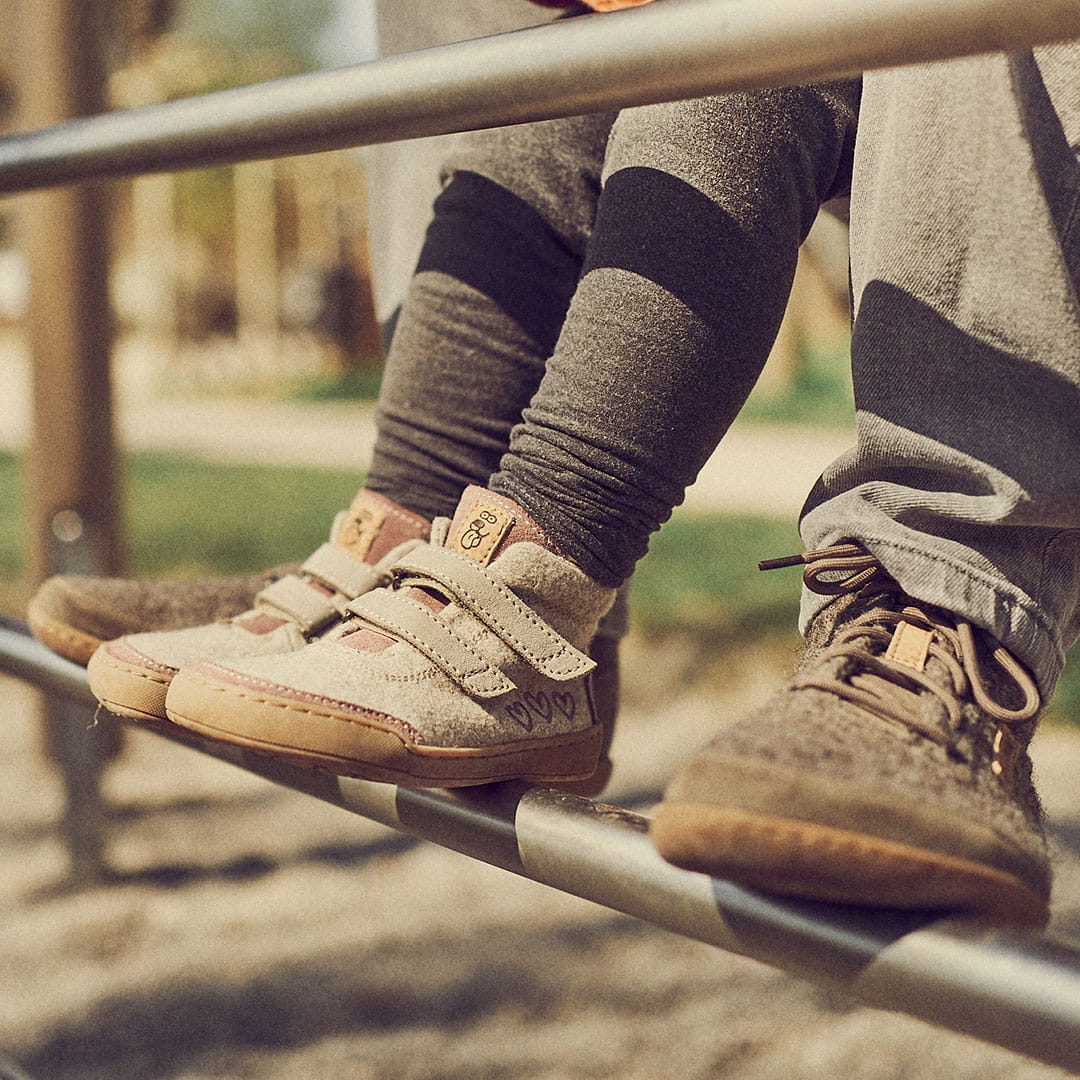
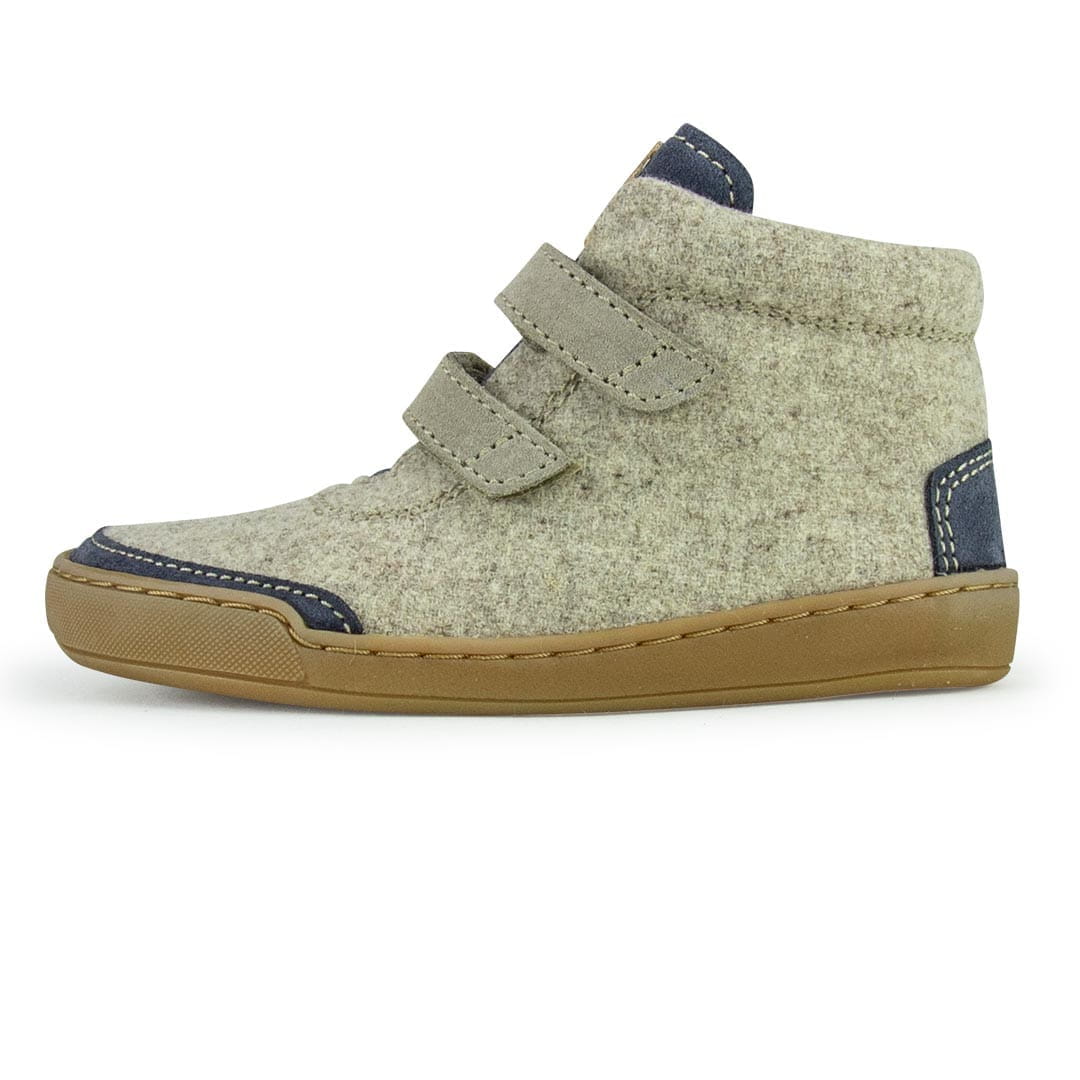
Sustainable barefoot shoes with a flexible sole and a wide toe box are extremely important for the healthy development of children’s feet in particular. That’s why we use natural materials such as cork and wool for our children’s barefoot shoes and avoid synthetic materials. Our children’s barefoot shoes feature a wide toe box and a highly flexible sole made from natural rubber, which provides a natural walking experience. Discover Doghammer’s sustainable children’s barefoot shoes now!


Children’s barefoot shoes – why they’re so important

Who is actually behind Doghammer’s children’s barefoot shoes?
Doghammer was founded in 2015 by Maximilian Hundhammer and Matthias Drexlmaier, who were students at the time. Both passionate mountain walkers, they initially developed an ‘outdoor toe-separator’, which was produced on request at a facility for people with disabilities. What began as a hobby alongside their studies quickly grew into a serious business venture. The two founders decided to take the next step and develop sustainable hiking shoes, as well as collaborate with specialist retailers. Since 2020, they have been working with a family-run shoe manufacturer in Portugal, which, according to Maximilian, perfectly aligns with their values and vision of fair production. Using natural materials such as recycled cork and locally sourced sheep’s wool from Germany, they created their first barefoot shoes for adults and children. Matthias expressed his surprise at the huge response: “We hadn’t expected these sustainable minimalist shoes for children to go down so well.” From the very beginning, the dispatch of the products has been handled in collaboration with a facility for people with disabilities in Rosenheim. Today, Doghammer’s five-strong team consists of highly motivated staff who continue to work towards making an even greater sustainable impact.
Why are sustainable barefoot shoes so important and healthy, especially for children?
There are three good reasons why it is particularly important for toddlers and children to learn to walk in barefoot shoes rather than in conventional shoes. These reasons also apply once the child can already walk …
- The foot muscles do not develop properly: children’s feet have not yet been ‘spoilt’ by conventional shoes. Just watch your child – they can even grip things with their toes. Shoes with soft cushioning and a heel-to-toe drop (see explanation below) wrap the feet as if in cotton wool, which leads to the foot muscles weakening or failing to develop properly in the first place. In the long term, this leads to problems such as postural misalignment, and foot or knee issues.
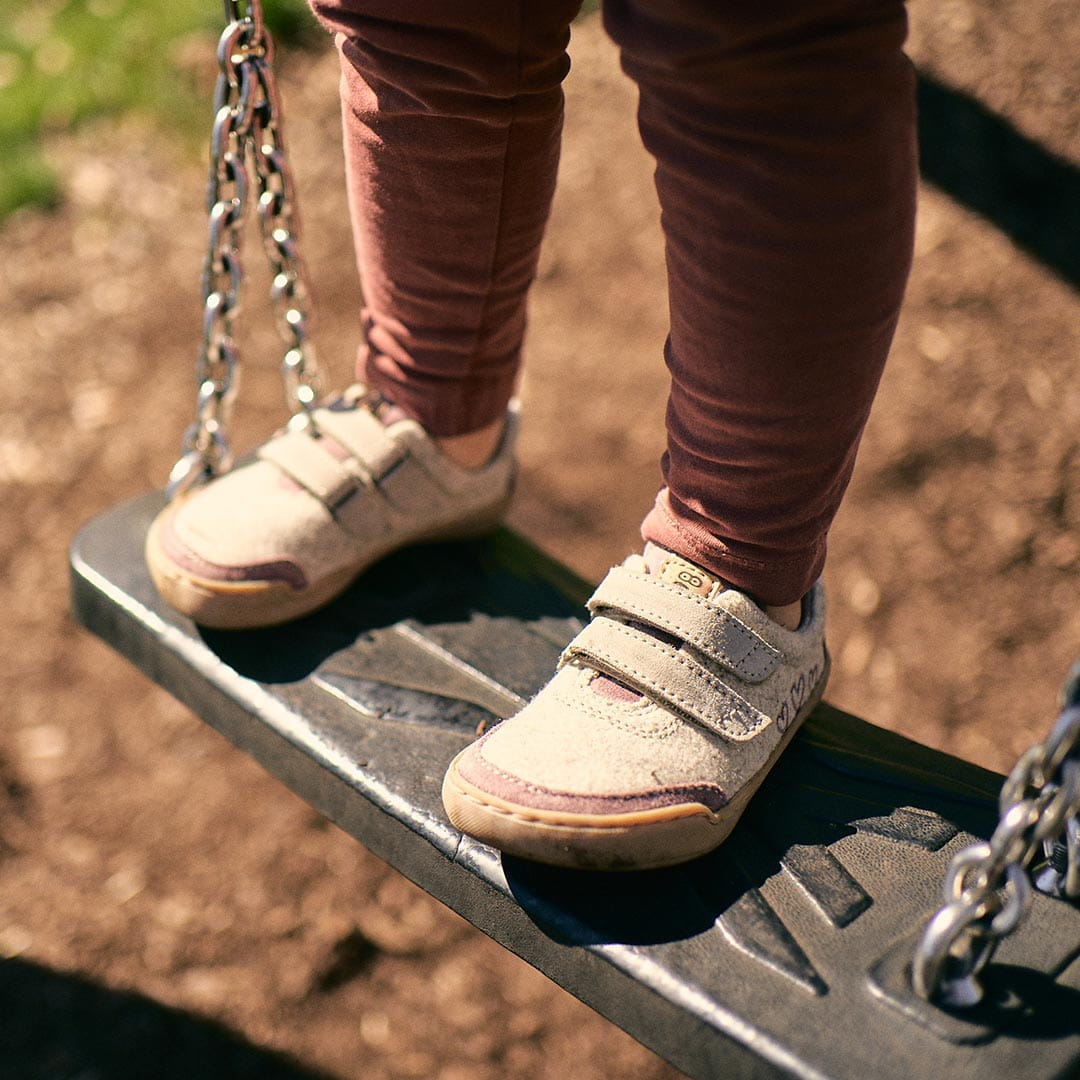
- Deformation of the toes: Take a close look at your children’s feet and you’ll see that the toes point slightly outwards and are the widest part of the foot. Now take a look at your own shoes (excluding barefoot shoes) – they taper to a point at the front. This does not correspond to the natural shape of the foot. Barefoot shoes for children, on the other hand, offer the toes sufficient space and freedom to move.
- Balance problems: Excessive cushioning and overly rigid soles mean the feet no longer receive feedback on the surface they are walking on. Yet this is such an important source of information for the brain to help it position the body correctly. This can lead, for example, to balance problems or the feet rolling inwards.

Where are the sustainable barefoot shoes for children made?
The sustainable barefoot shoes for children are handcrafted in our family-run shoe factory in Portugal. Since 2019, we have been working closely with the production team and have built up a reliable network of local suppliers. For example, we source the upper material for the children’s barefoot shoes directly from Portugal, which allows us to keep the carbon footprint very low thanks to the short distances involved. Furthermore, our children’s barefoot shoes do not spend weeks at sea; instead, they take just a few days by lorry to reach our warehouse in Rosenheim.

What is the heel-to-toe drop in children’s shoes?
In children’s shoes, heel-to-toe drop refers to the difference in height between the tip of the foot and the heel. This can range from a few millimetres to a few centimetres (in high heels). Sustainable children’s barefoot shoes and first-step shoes have no heel-to-toe drop; they are designed according to the so-called ‘zero-heel’ principle. Wearing shoes with a heel-to-toe drop shortens the calf muscles. Particular care should therefore be taken, especially with children, to ensure that only barefoot shoes without a heel-to-toe drop are worn.
What materials are used for sustainable children’s barefoot shoes?
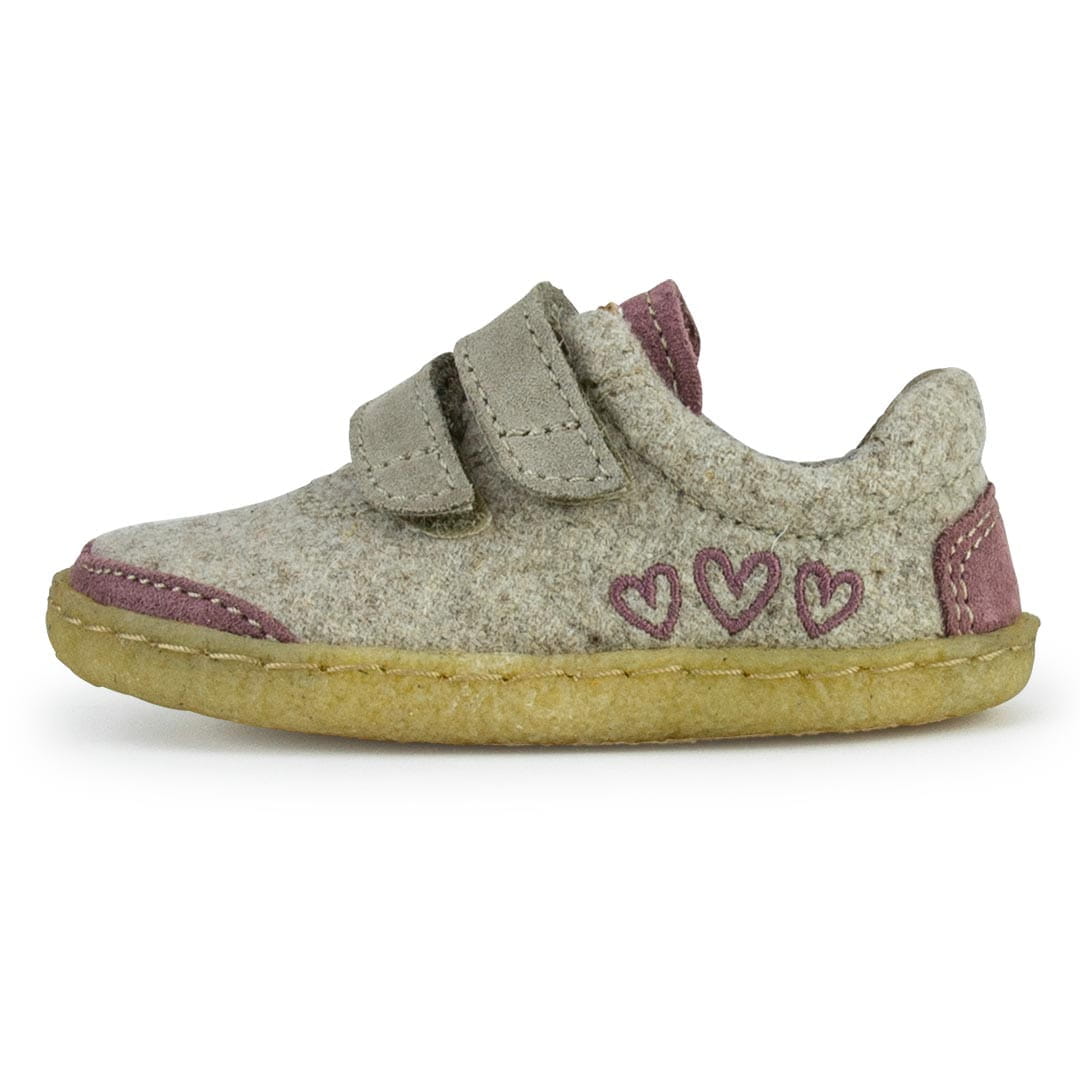
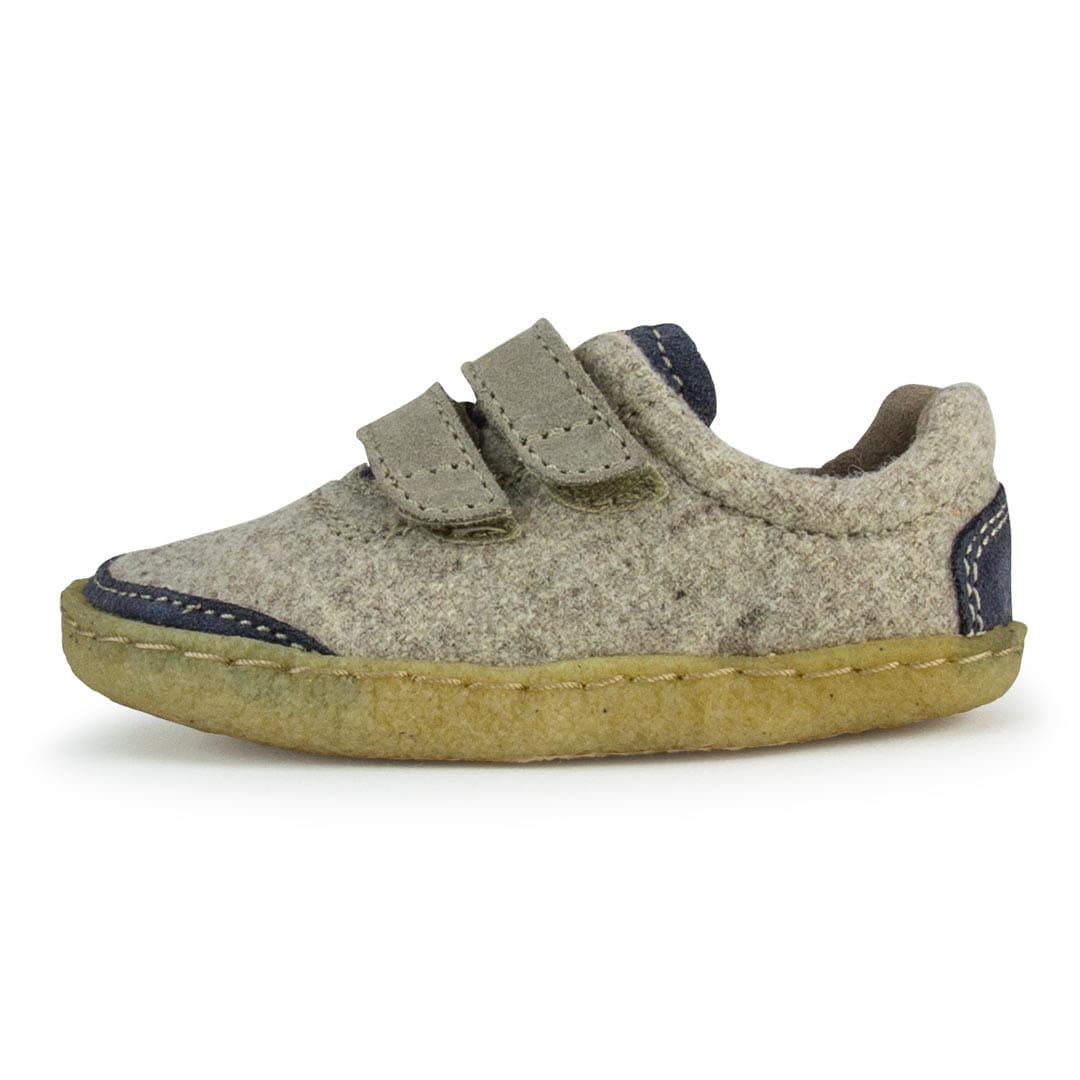
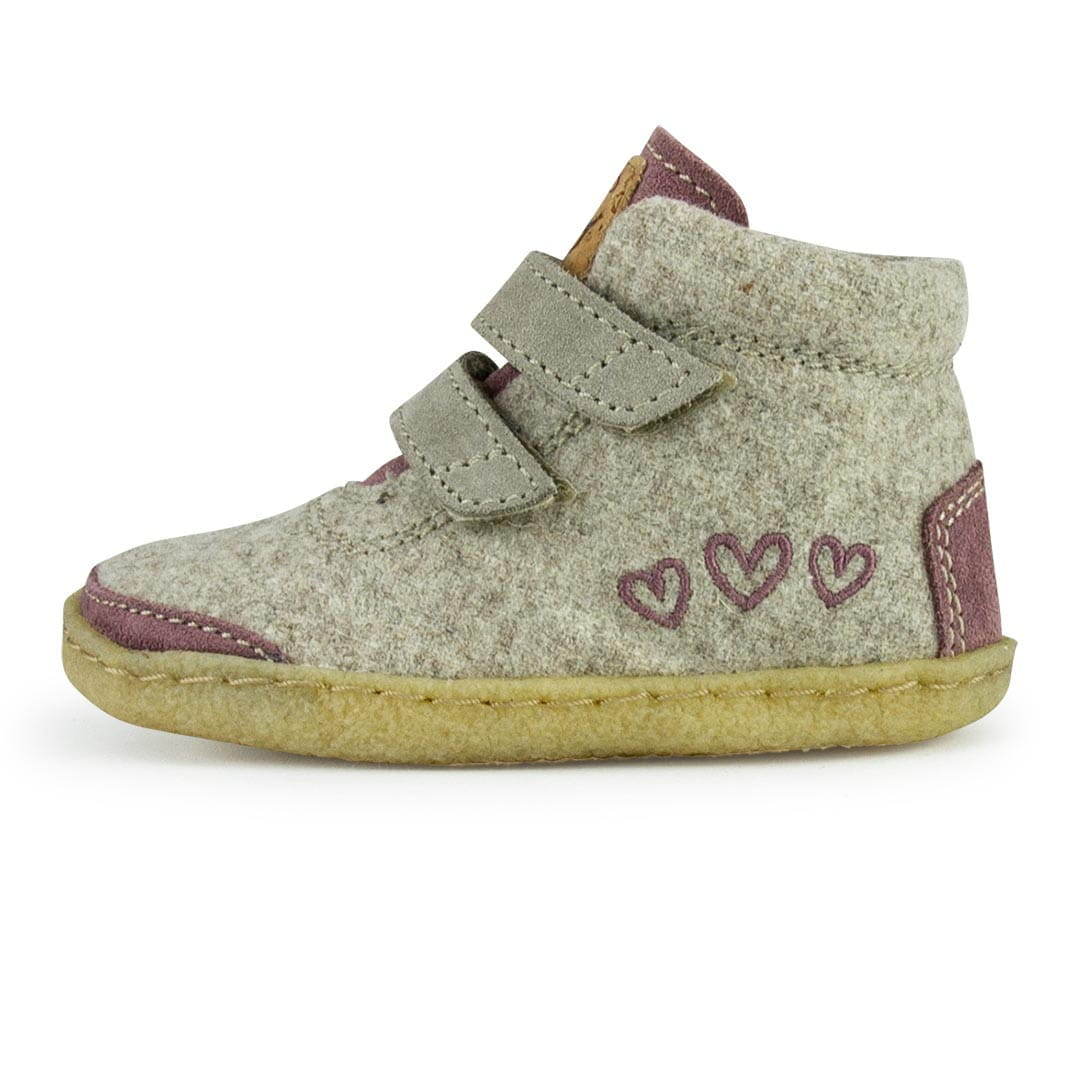
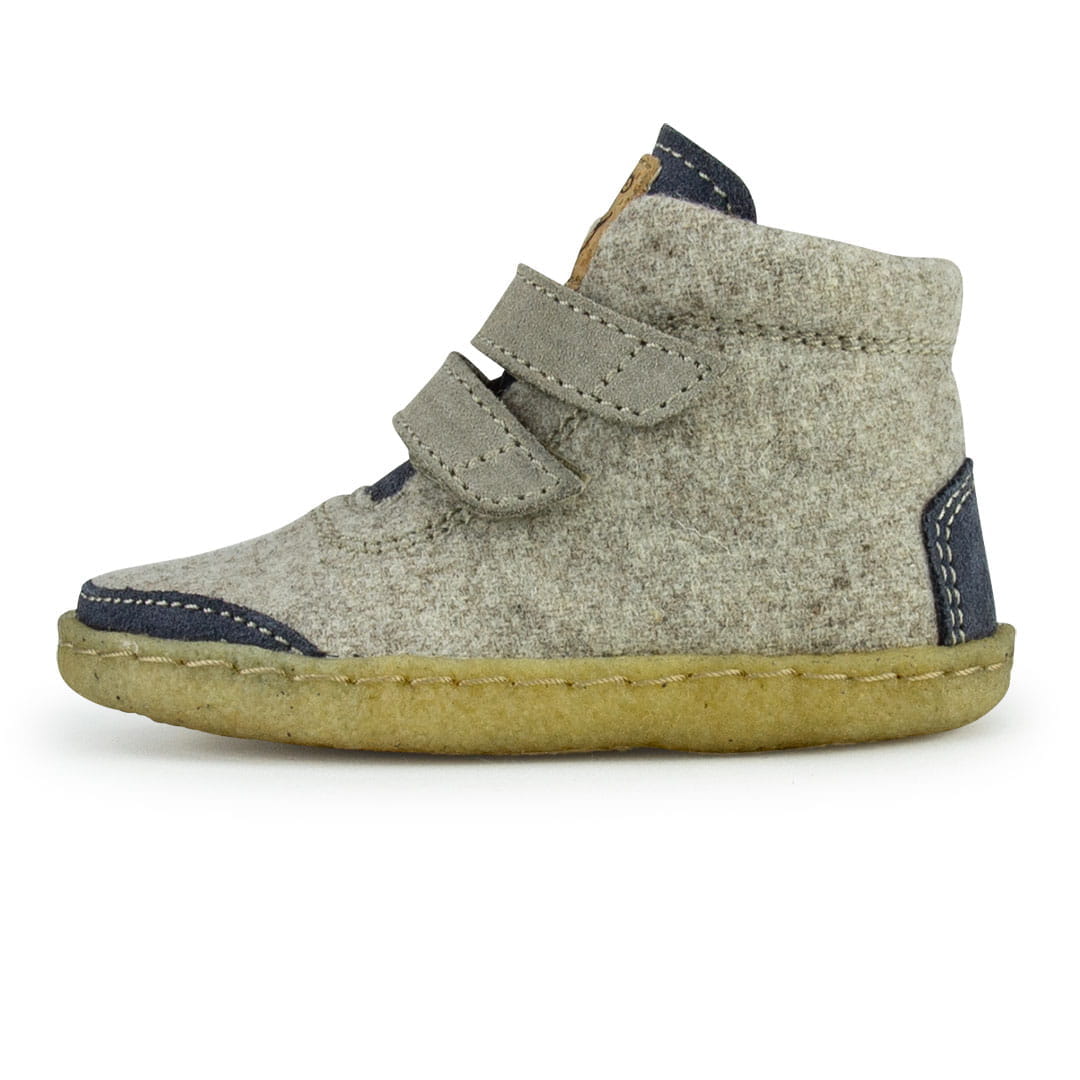
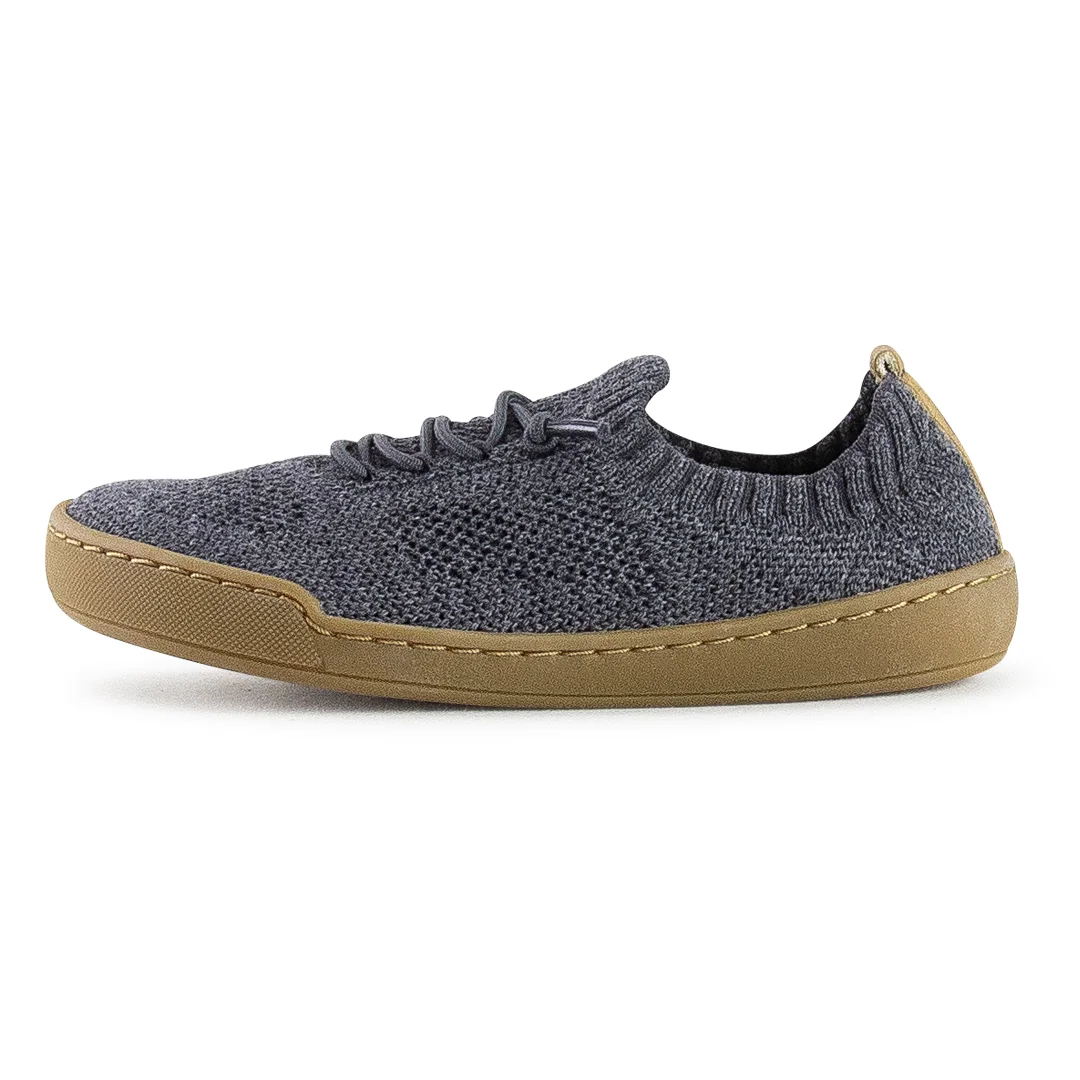
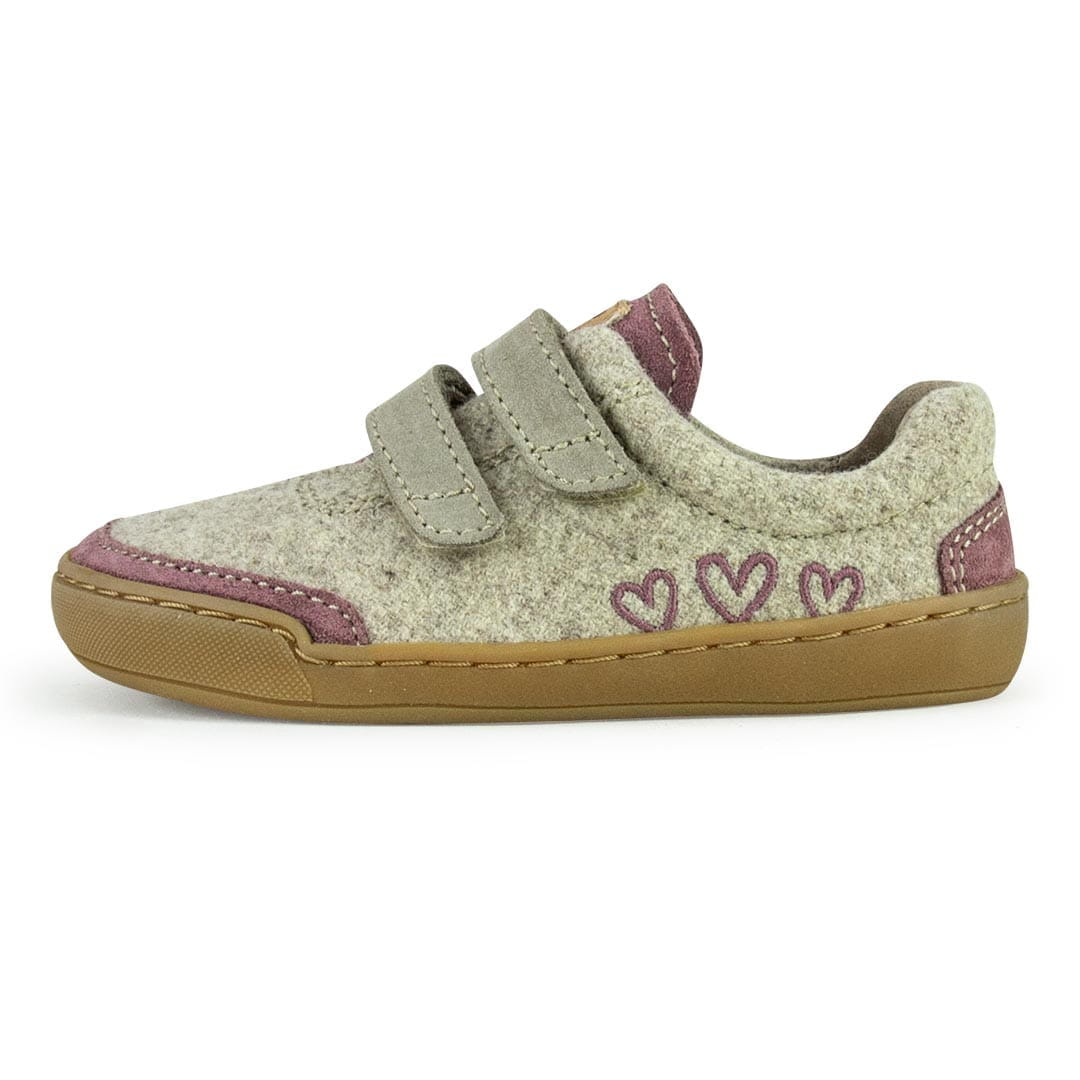
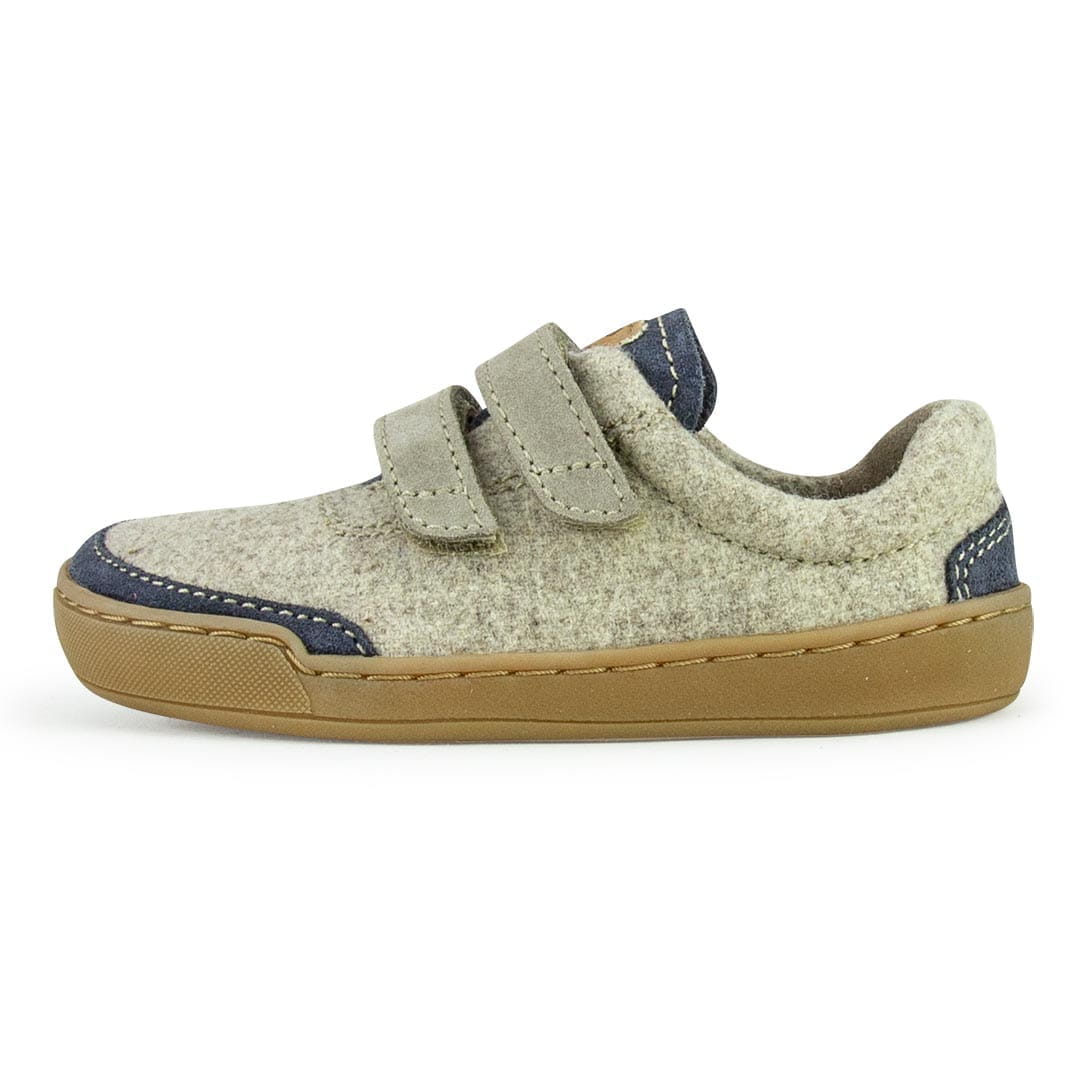
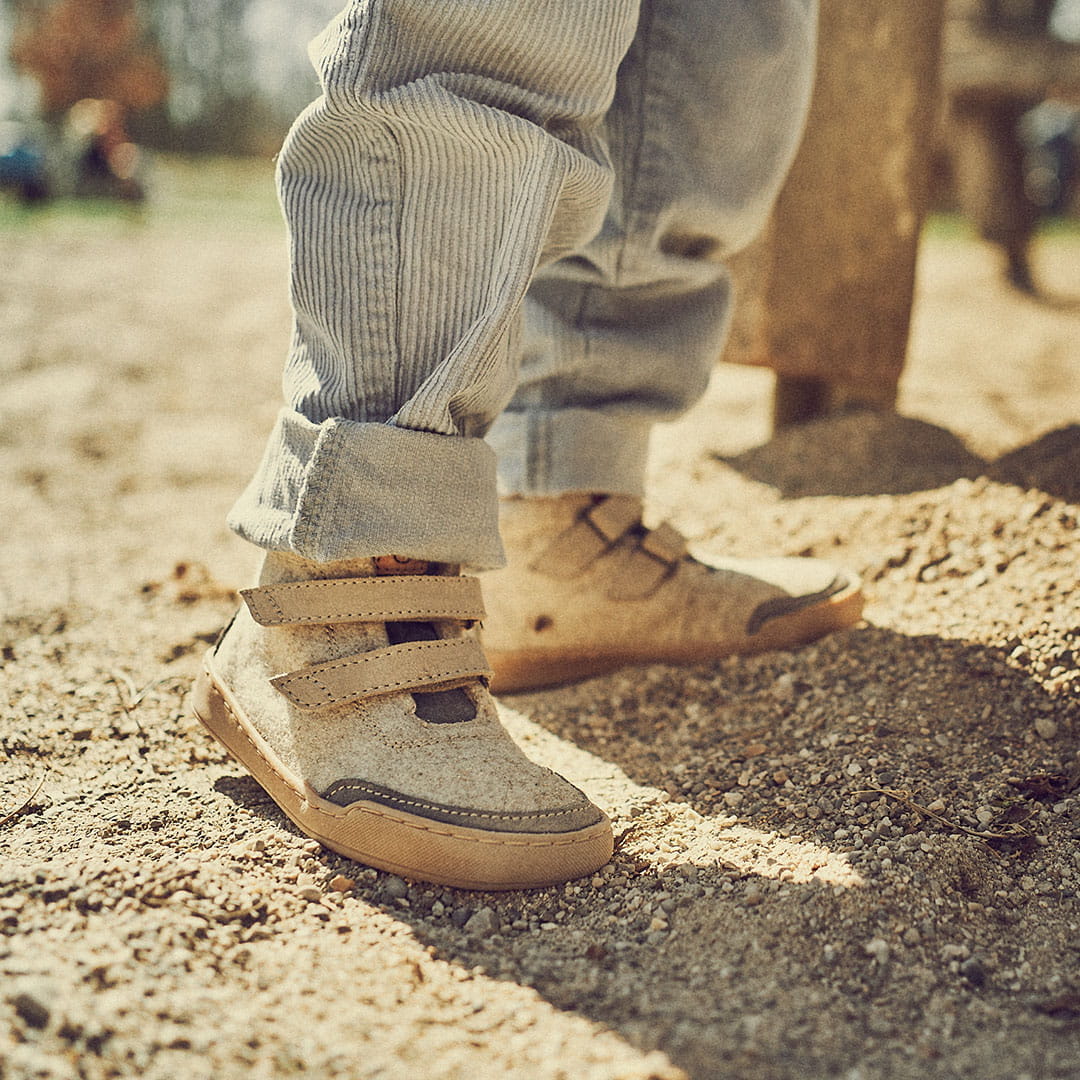
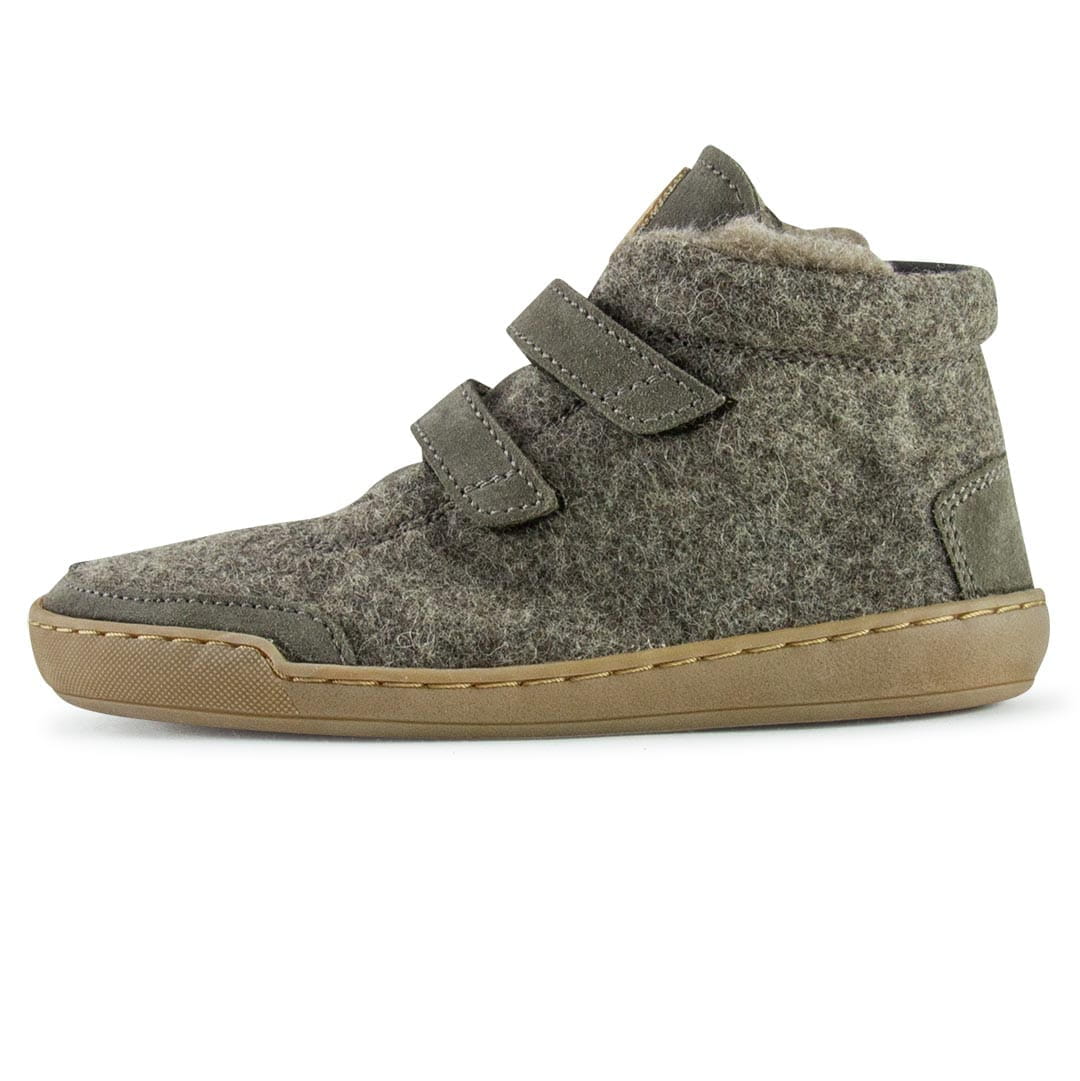
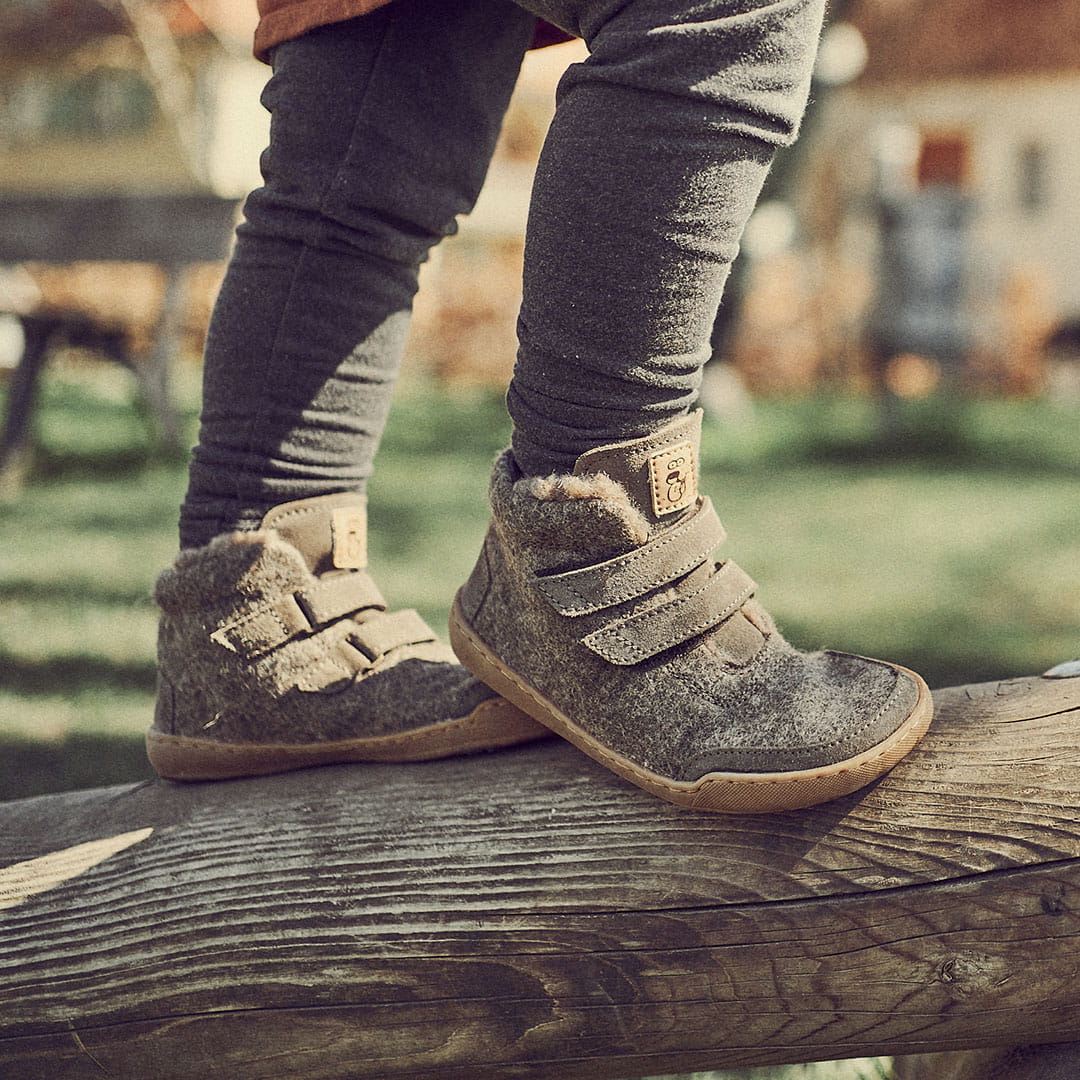
For our sustainable children’s barefoot shoes, we rely on natural materials such as cork, wool and leather. We have chosen these materials because we are convinced that, when combined, they provide the healthiest foot environment, the most natural dirt-repellent properties and the very best for children’s feet. For example, we use cork for the insole. Cork is antibacterial, dirt-repellent and completely waterproof – meaning your child will never have to stand on wet insoles. Wool is used for both the lining and the outer material. Our wool is undyed, which means it retains a high natural wool grease content, and comes from Portugal or Germany. Thanks to this natural wool grease, the shoes are extremely dirt- and moisture-repellent, without the use of any synthetic materials. The leather on the toe and heel caps also comes from Portugal and protects the wool and the shoe in areas subject to heavy wear. For the sole, we use natural rubber, as it offers the best properties for children’s barefoot shoes.
How waterproof and dirt-repellent are the children’s barefoot shoes, and can I clean them?
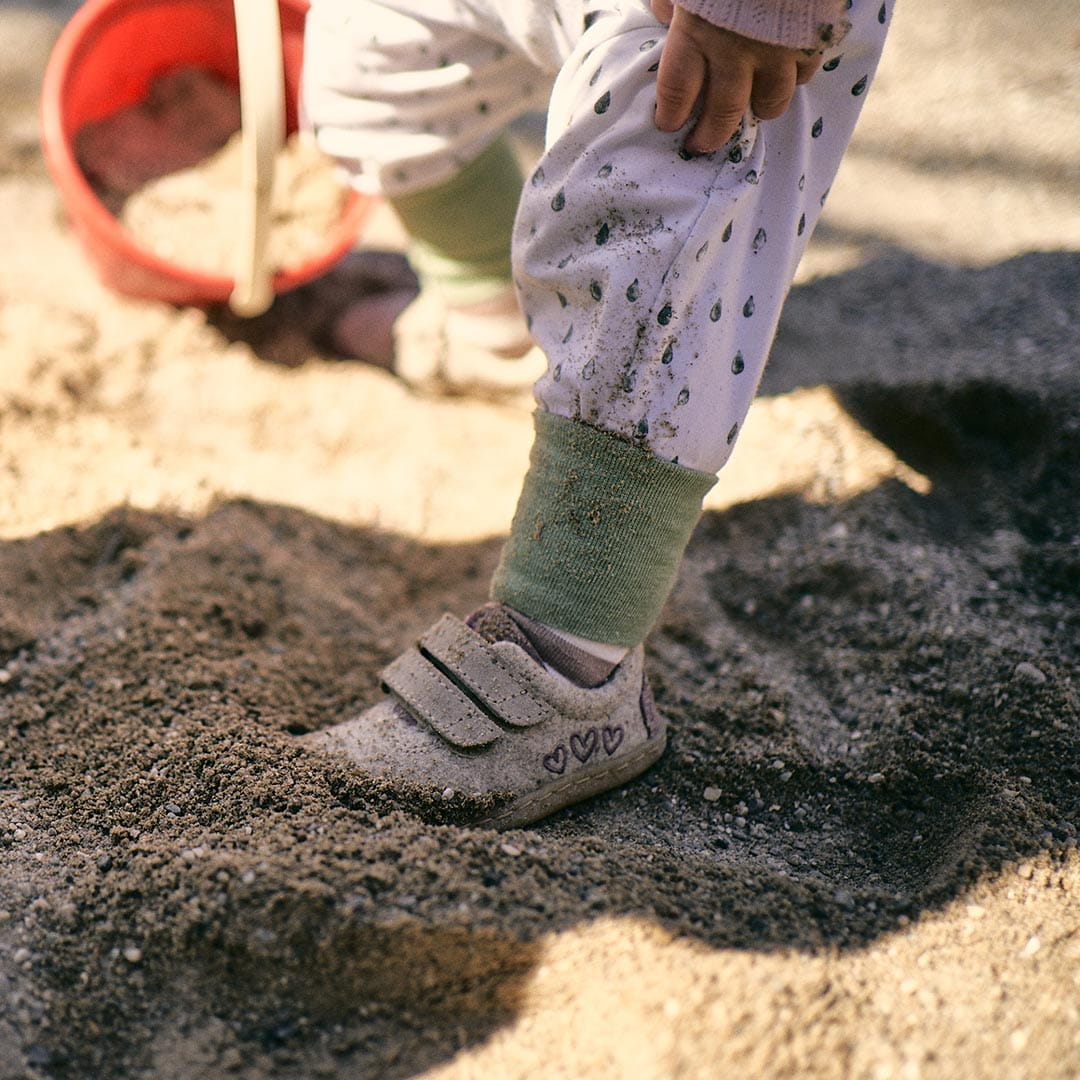
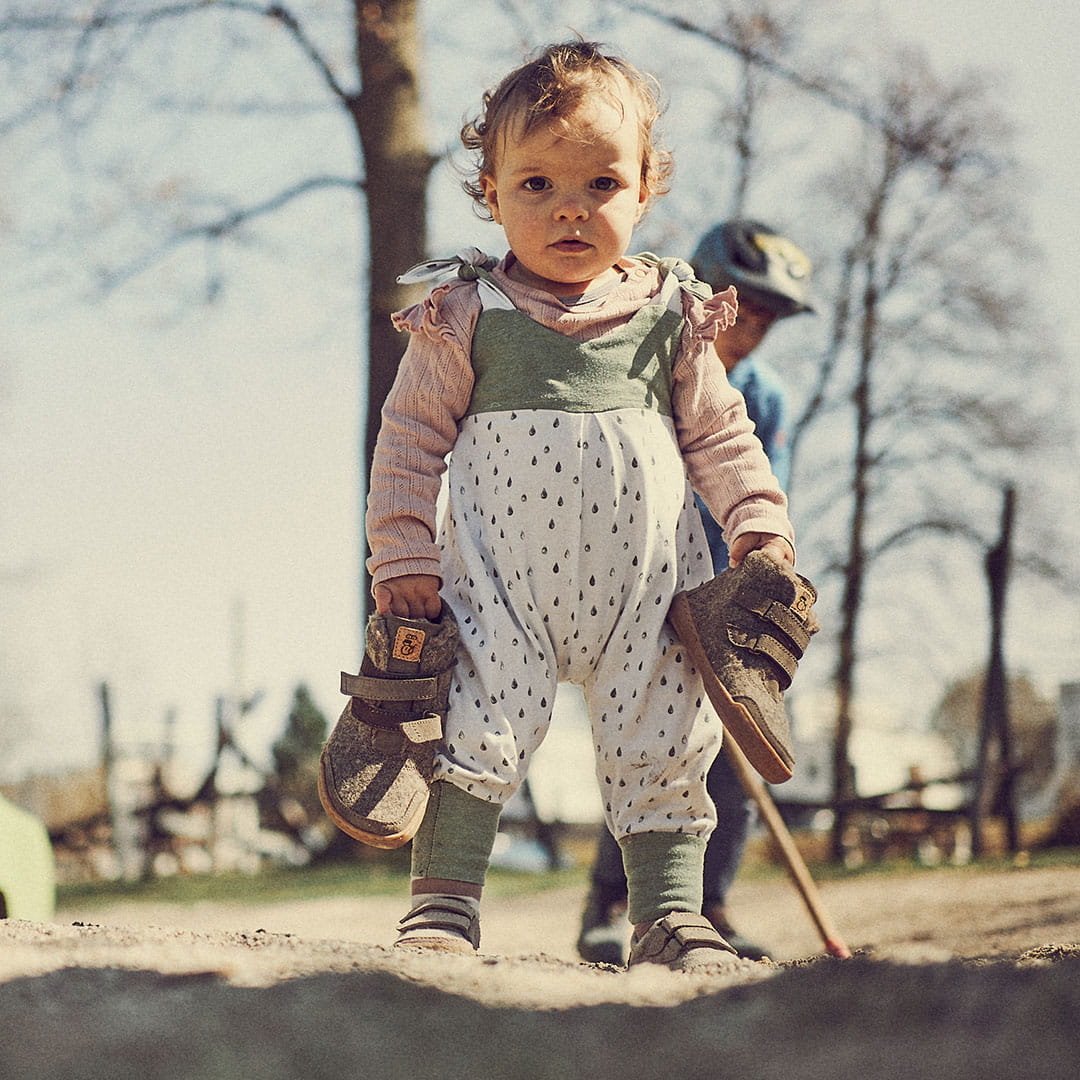
As some members of the Doghammer team have children of their own, we know just how quickly a child can end up standing in a puddle or sitting in a sandpit. That’s why we use natural materials such as wool, cork and leather for our children’s barefoot shoes. At first glance, you might think that these are exactly the wrong materials and that we should opt for synthetics instead, but the opposite is actually true. Natural materials are inherently dirt- and water-repellent. Our wool, for example, is undyed and has a high lanolin content (wool grease) – have you ever seen a sheep with muddy wool? No, because lanolin repels dirt, just like a water-repellent coating. What’s more, these materials dry much faster and provide a comfortable and natural foot environment.
What should I look out for when buying sustainable barefoot shoes for children?
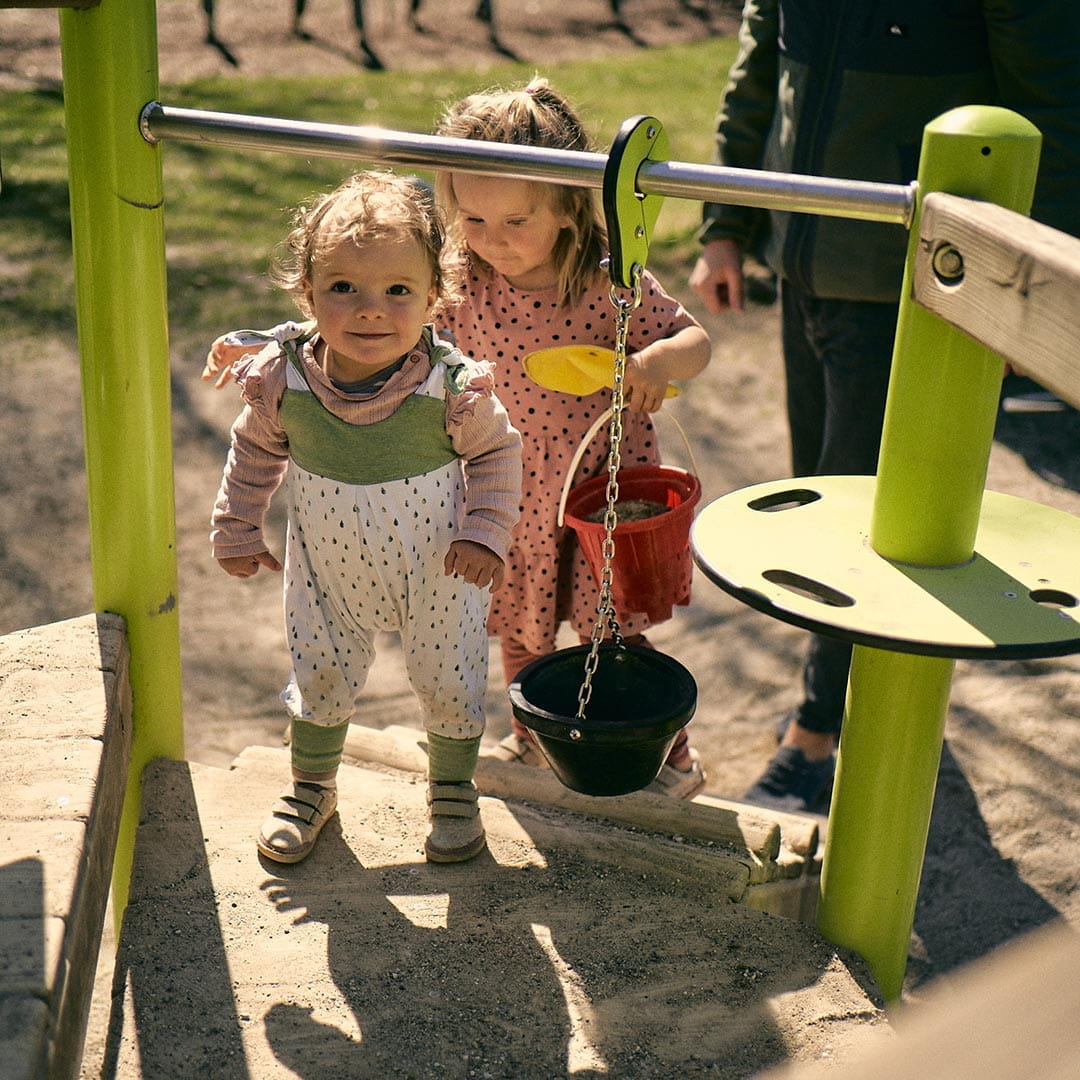
It’s important to look for a flexible sole when buying barefoot shoes for children. Children are light in weight, so the sole needs to be very flexible. You should also make sure not to buy children’s barefoot shoes that are too big or too small. We offer special insoles for our children’s barefoot shoes; these allow you to make the shoes half a size smaller. This means you can opt for the larger sizes a little earlier and compensate with the insole. We also recommend buying only children’s barefoot shoes with Velcro fastenings. This allows children to put on and take off these sustainable barefoot shoes by themselves – something that, from our own experience, nursery and kindergarten staff are very pleased about.