

Sustainable barefoot shoes – fair. comfortable. eco-friendly.
Discover sustainable barefoot shoes for every occasion – including: barefoot shoes for women, barefoot shoes for men, and sustainable barefoot shoes for children.
- 🌱 Natural materials such as cork, wool & recycled textiles
- 👣 A natural walking experience thanks to a flexible sole and zero heel
- 🤝 Fairly produced in Portugal – short supply chains
- 🧘♂️ Breathable and comfortable – for the best possible foot climate


Raus aus dem Alltag, rein ins Abenteuer: Der wasserdichte, knöchelhohe Barfuß Wanderschuh bringt dich mit griffiger Barfuß-Vibram-Sohle, Wiltex®-Membran und umlaufendem Geröllschutz durch jedes Abenteuer – mit viel Zehenfreiheit und dem natürlichen Laufgefühl eines Barfußschuhs.


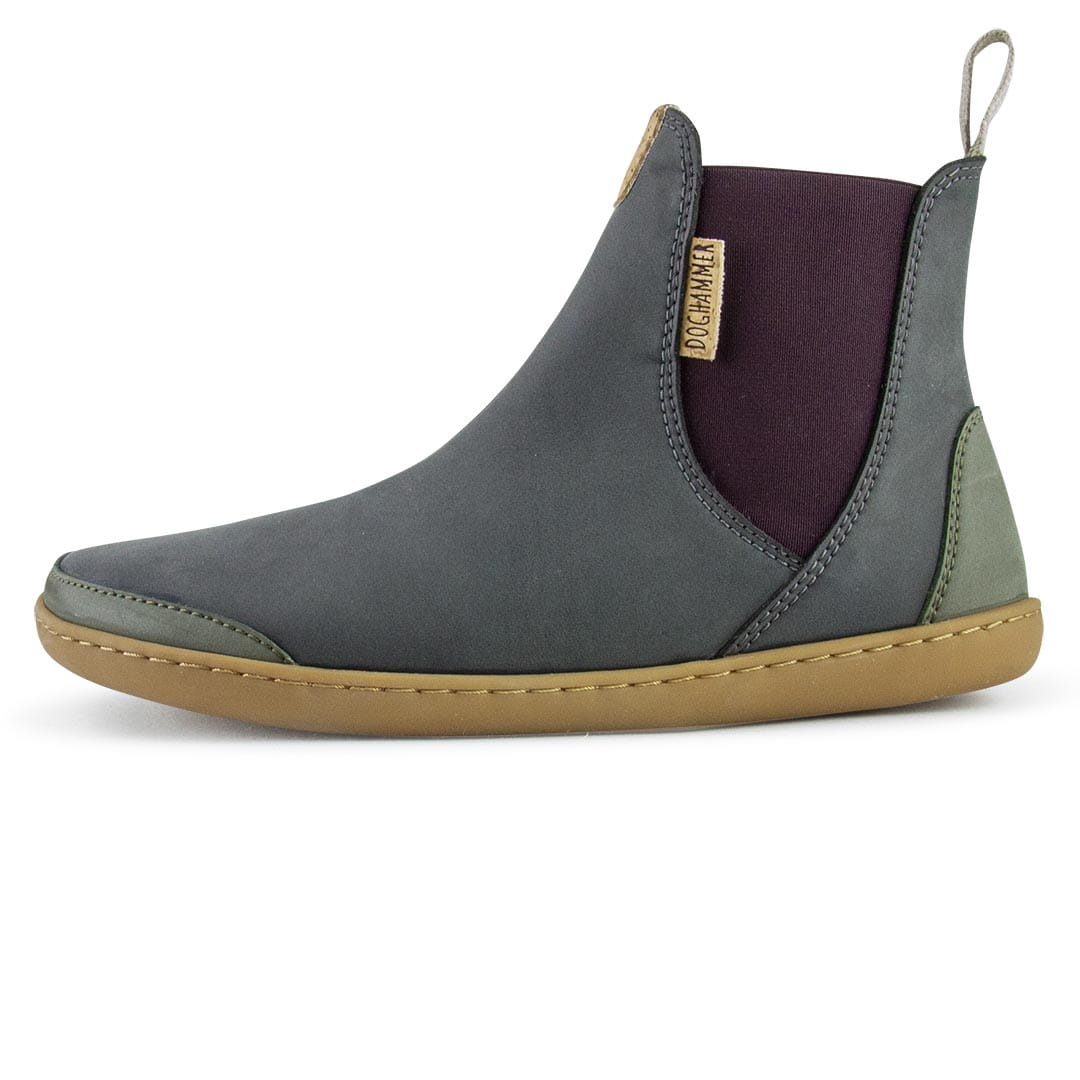
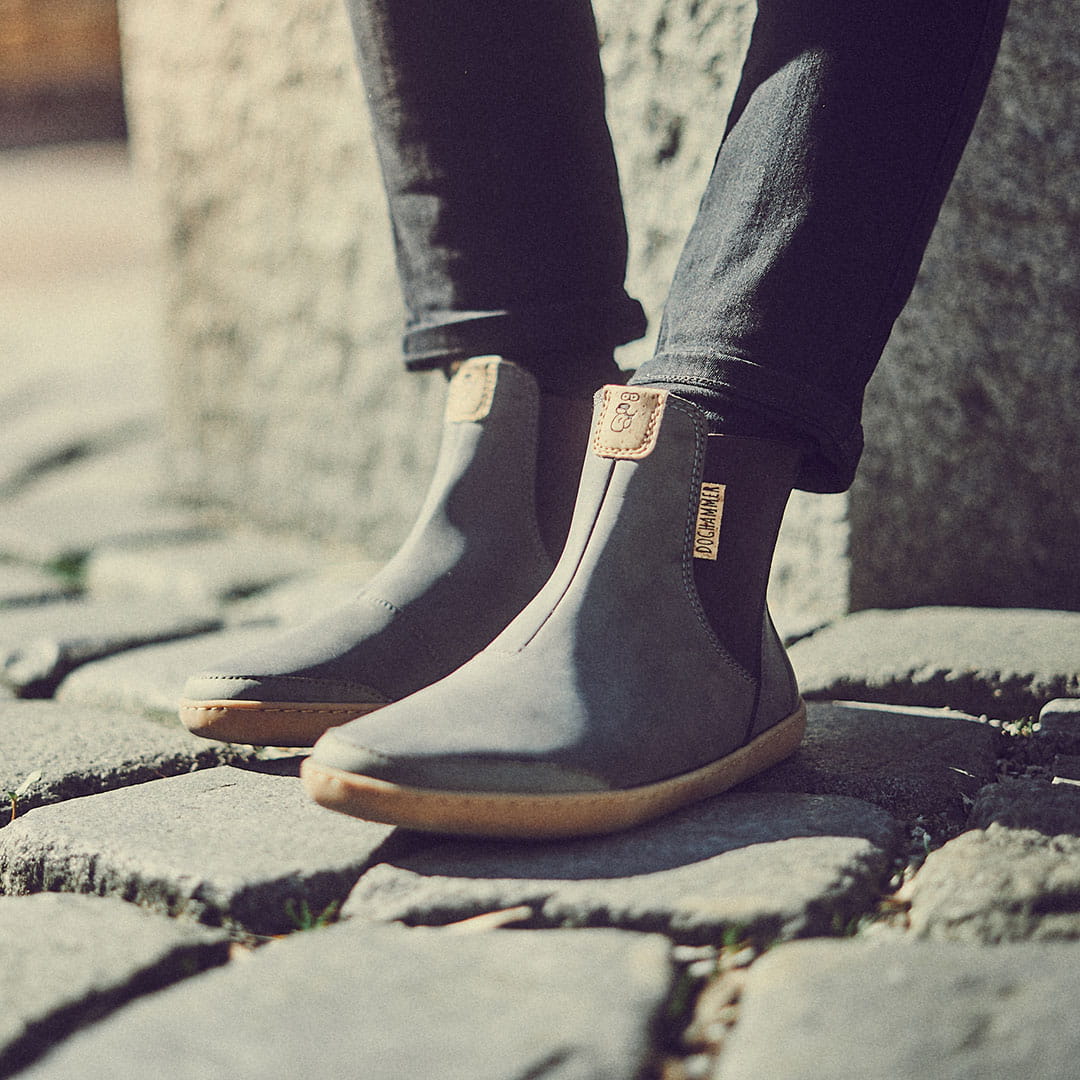


Bereit für nasse Trails und wilde Wege? Der wasserdichte, knöchelhohe Barfuß Wanderschuh verbindet natürlichen Bewegungsfreiraum mit Schutz fürs Gelände. Wiltex®-Membran, griffige Vibram-Sohle und umlaufender Geröllschutz machen ihn zum zuverlässigen Begleiter für dein nächstes Outdoor-Abenteuer.


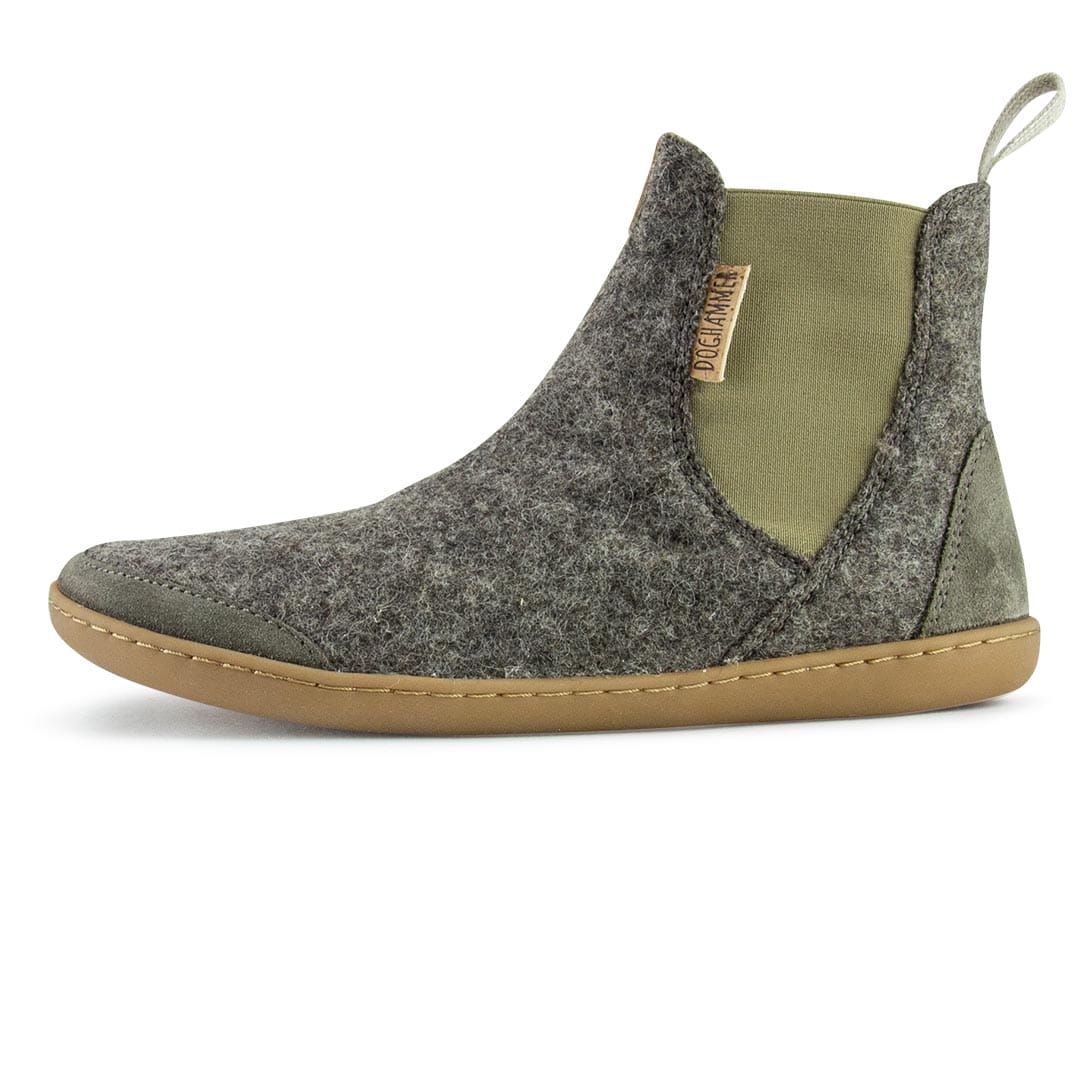


Wasserdicht, warm und herrlich flexibel: Der Terrar Chelsea kombiniert echte Schafwolle mit wasserdichter Wiltex® Membran und natürlichem Barfußgefühl. So bist du auch an kalten, nassen Tagen bequem unterwegs – ob im Alltag, im Büro oder beim Spaziergang durchs Sauwetter.


our most popular barefoot shoe categories


What sets our barefoot shoes apart


A guide to sustainable barefoot shoes from Germany

In this guide to sustainable barefoot shoes, you’ll find the following information...
- Who is behind Doghammer’s barefoot shoes?
- What distinguishes barefoot shoes from conventional shoes?
- Where are these sustainable barefoot shoes made?
- What do physiotherapists and orthopaedic specialists say about barefoot shoes?
- Why children should definitely wear barefoot shoes!
- Barefoot shoes: pros and cons
- What materials do we use for our sustainable barefoot shoes?
- Can I wash my barefoot shoes?
- What should I bear in mind when buying barefoot shoes?
- Discover more styles of our sustainable minimalist shoes.
- Want to find out more? Check out our magazine articles on barefoot shoes.
Who is actually behind Doghammer’s barefoot shoes?
Doghammer was founded in 2015 by then-students Maximilian Hundhammer and Matthias Drexlmaier. Their passion for the mountains led to the creation of an ‘outdoor toe-separator’, manufactured in a facility for people with disabilities. What began as a hobby grew into the development of sustainable hiking shoes and collaborations with specialist retailers. Since 2020, they have been working closely with a family-run shoe manufacturer in Portugal, which, according to Maximilian, ‘aligns very well with our values’. Using natural materials such as recycled cork and German sheep’s wool, they created their first barefoot shoes for women, barefoot shoes for men and sustainable barefoot shoes for children. From the very beginning, dispatch has been handled jointly with the facility in Rosenheim. Today, the five-person team – as a barefoot shoe manufacturer based in Germany – is setting new standards and leaving a sustainable footprint.

Matthias Drexlmaier and Maximilian Hundhammer, founders of Doghammer.
What distinguishes barefoot shoes for women, men and children from conventional shoes?
The idea behind barefoot shoes is to replicate the sensation of walking without shoes whilst still offering your feet a certain level of protection. As such, barefoot shoes differ significantly from conventional shoes in terms of sole construction and last design. In standard shoes, the sole is usually slightly stiffer and firmer. In contrast, our barefoot shoes feature an extremely thin and very flexible sole that allows you to feel the ground beneath your feet. Another key point is that barefoot shoes have no heel-to-toe drop – that is, no height difference between the toes and the heel – whereas in normal shoes this is usually around 10–15 mm. The final and crucial difference is the significantly wider toe box, which gives your toes plenty of freedom. This is evident in the rounded shape of the shoe, which does not taper to a point at the front. You can find all the key terms relating to barefoot shoes in the Barefoot Shoe FAQs.
We stock barefoot shoes for women, men and children – all designed in Germany. You can also find a more detailed explanation in our magazine.
Where are the sustainable barefoot shoes made?
Our barefoot shoes, produced by a German manufacturer, are handcrafted in a family-run shoe workshop in Portugal. We have been working closely with the production team since 2019, developing our sustainable shoes, barefoot shoes and shoe lasts there. As a result, the majority of our materials come from Portugal and Spain, which brings the major advantage of very short transport distances between suppliers and our production facility. The sole for our barefoot shoes, for example, is produced just 50 kilometres away from our workshop. Our barefoot sandals, barefoot hiking boots, barefoot slippers, vegan barefoot shoes and merino barefoot shoes are also made in the same factory. Our sustainable barefoot shoes are characterised by short transport distances, fair working conditions and sustainable processes.

What do orthopaedic surgeons and physiotherapists say about barefoot shoes?
Physiotherapists and orthopaedic specialists regard barefoot shoes as a useful addition for healthy people – particularly for children. They help to strengthen muscles and improve body awareness, but should not be seen as a ‘cure’ in their own right. It’s important to ease into wearing them gradually, ideally by alternating with conventional shoes. Barefoot shoes really come into their own on natural surfaces. Whether they’re suitable for you depends on your health and your everyday life – it’s best to seek expert advice. You can also find a detailed article on this topic in our Barefoot Magazine, where we also answer the question “How healthy are barefoot shoes?”.
Why children should wear barefoot shoes!
Children’s feet need space, stimulation and freedom! Barefoot shoes provide more room in the forefoot, promote balance and allow the muscles to develop healthily. Rigid soles or tight shoes hinder natural development. Important: Barefoot shoes should be flexible, lightweight and made from natural materials – never buy them too small! It’s better to leave a bit of room. And: A Velcro fastening helps children put their shoes on by themselves – much to the delight of everyone at nursery and elsewhere. You can find more information on this in our Barefoot Magazine.

Advantages and disadvantages of barefoot shoes for women, men and children
Barefoot shoes promote a natural walking experience thanks to flexible soles, wide toe boxes and a zero-heel design. They strengthen the muscles and improve posture, as well as enhancing proprioception, which is particularly noticeable with barefoot hiking shoes. However, they’re not all they’re cracked up to be: the lack of cushioning makes them less comfortable on hard surfaces or when standing for long periods in winter. Poor insulation can lead to cold feet. The unusual look and the adjustment period required also put some people off. Tip: Start slowly and alternate with well-cushioned shoes to avoid straining your feet. You can find a detailed report on this in our Barefoot Magazine.
What materials do we use for our barefoot shoes?
To give you that barefoot feeling, we use very light and flexible materials – with a clear focus on using as many natural materials as possible. The thin insole of our barefoot shoes, for example, is made from recycled cork. For the upper of our barefoot trainers, we use textiles such as linen or cotton. For our barefoot shoe, which is designed more for the transitional seasons, we use loden made from Pomeranian land sheep from northern Germany – similar to our hut shoes. Thanks to the natural materials, the shoes always provide a very comfortable foot environment and prevent the build-up of unpleasant odours. These barefoot shoes made from natural materials offer a genuine alternative for anyone who values sustainability and healthy walking comfort, thereby enhancing their sense of the ground beneath their feet. You can find our wool barefoot shoes here, and click here to see our merino barefoot shoes.

Can I wash my barefoot shoes as well?
In an absolute emergency, you can put your barefoot shoes in the washing machine on the ‘wool cycle’. However, we recommend avoiding this, as the shoes will still suffer despite the gentle cycle. A better method is to remove any coarse dirt from the shoes using lukewarm water and a soft cloth. You’re also welcome to treat them with a care product. For barefoot shoes made of wool, we recommend using a care product that contains natural wool grease (lanolin). Lanolin is essential for the shoes’ dirt- and water-repellent properties and also keeps snow out of our winter barefoot shoes. Click here for our cleaning guide for barefoot shoes.

What should I bear in mind when buying barefoot shoes?
If you’re wearing barefoot shoes for the first time, it will take a few days to get used to them – there’s more space in the toe box and you’ll feel more direct contact with the ground, thanks to the minimalist sole. It’s best to ease into wearing barefoot shoes gradually. In other words, don’t set off on a long walk or hike straight away. Let your feet get used to the new feeling of freedom and gradually increase the time you spend wearing them and the distances you cover in your new sustainable barefoot shoes. Another thing to bear in mind when trying them on for the first time is that the shoes give your feet significantly more room. So the shoes aren’t necessarily too big for you; it’s simply a different sensation to have more space. You should have about half a thumb’s width to a thumb’s width of space between your longest toe and the edge of the shoe, and there should be sufficient room in the toe box. You’ll soon notice how your foot muscles adapt to these new challenges.
Discover more barefoot shoe categories alongside women’s barefoot shoes, men’s barefoot shoes and children’s barefoot shoes
We have lots more categories dedicated to barefoot shoes. Discover our wide range now!


Read fascinating magazine articles about feet, barefoot shoes and more.
In our Barefoot Magazine, you’ll find plenty of information on barefoot shoes, feet, foot exercises and product reviews
Frequently Asked Questions & Answers about barefoot shoes
Find out useful information about barefoot shoes in our dedicated FAQ section on barefoot shoes!
Ein Barfußschuh gibt dir das Gefühl vom Laufen ohne Schuhe – nur mit einer schützenden Hülle aus Naturmaterialien. Er hat keine Sprengung, eine flexible Sohle und eine breite Zehenbox, damit sich dein Fuß natürlich bewegen kann.
Zero Drop heißt: kein Höhenunterschied zwischen Ferse und Zehen – also kein Absatz. Du stehst wie barfuß auf dem Boden. Das sorgt für eine natürliche Körperhaltung, stärkt deine Waden- und Fußmuskulatur und entlastet Knie und Rücken.
Die Sprengung beschreibt den Höhenunterschied zwischen Ferse und Vorfuß. In normalen Schuhen bringt dieser „Absatz“ den Körper in eine unnatürliche Schieflage – was sich auf die gesamte Statik auswirken kann. Barfußschuhe verzichten komplett auf diese Erhöhung – gut für deine Haltung, deinen Rücken und dein Gangbild.
Nullabsatz ist ein anderer Begriff für Zero Drop – also eine durchgängig flache Sohle ohne Erhöhung an der Ferse. Das sorgt für eine natürliche Haltung und Bewegungsfreiheit.
Barfußschuhe setzen auf Minimalsohlen – besonders dünn, besonders flexibel. Die Idee: deine Füße bekommen Schutz vor dem Untergrund, bleiben aber aktiv und spüren, was unter ihnen passiert. Das stärkt Muskeln, Gelenke und Koordination.