

First-step shoes for children
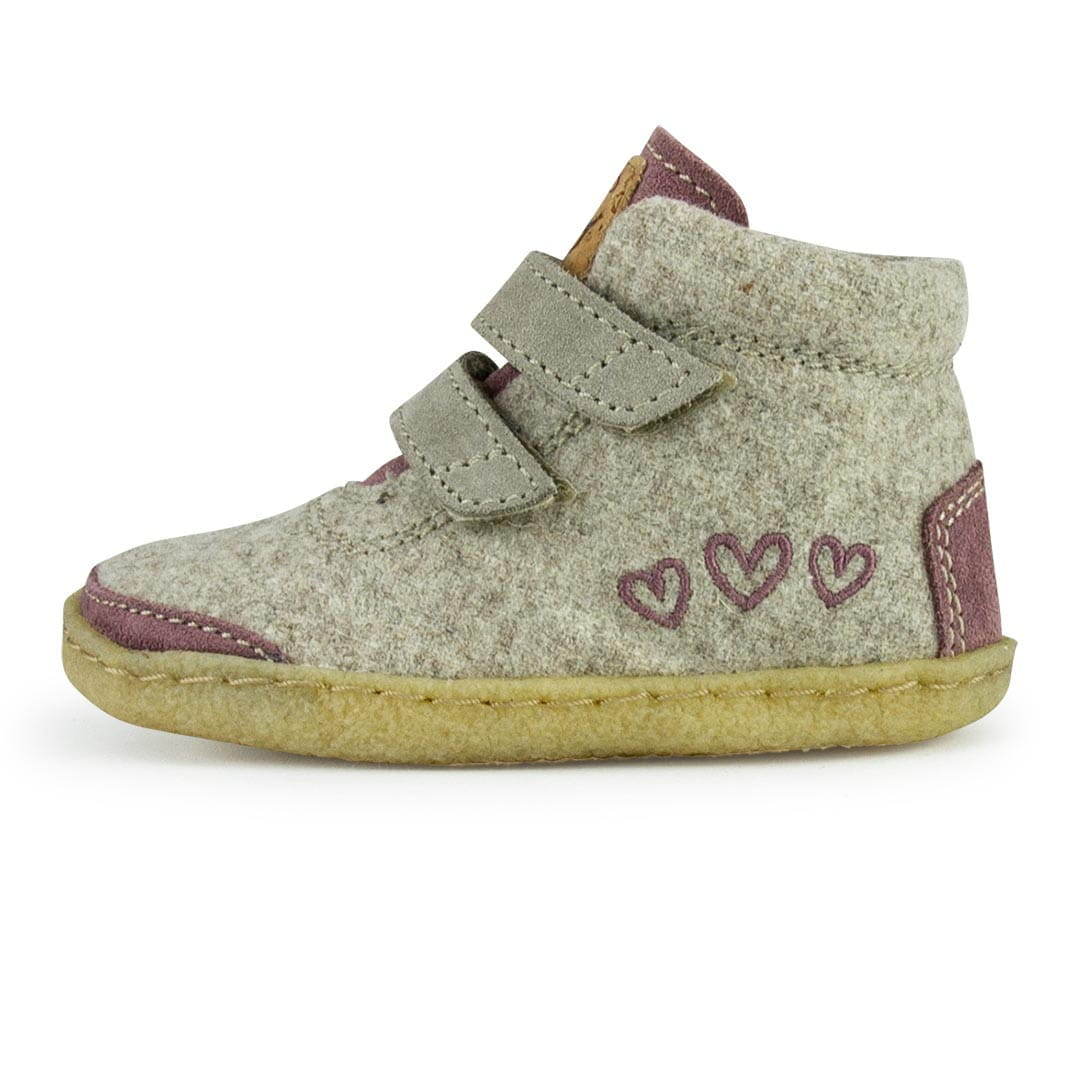
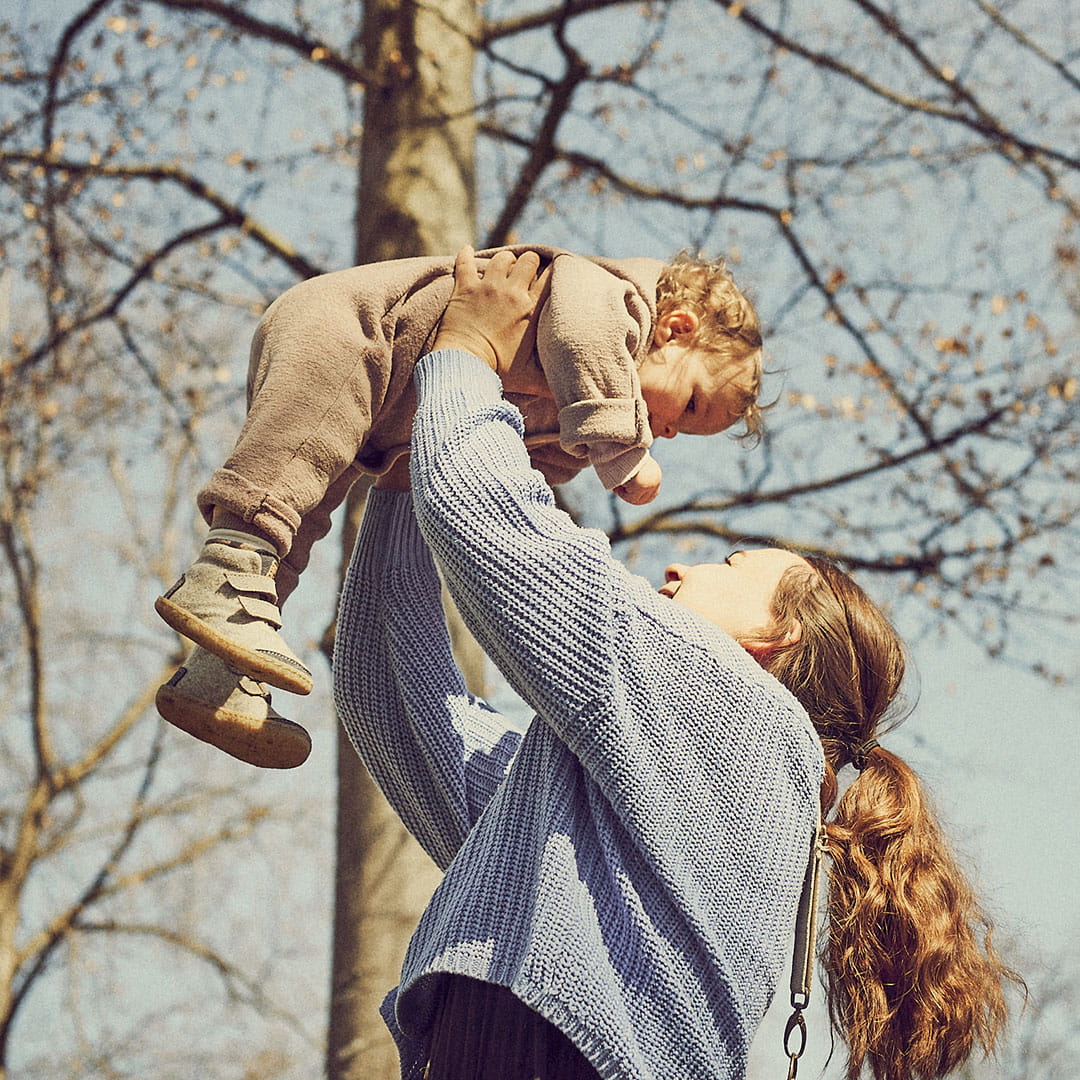
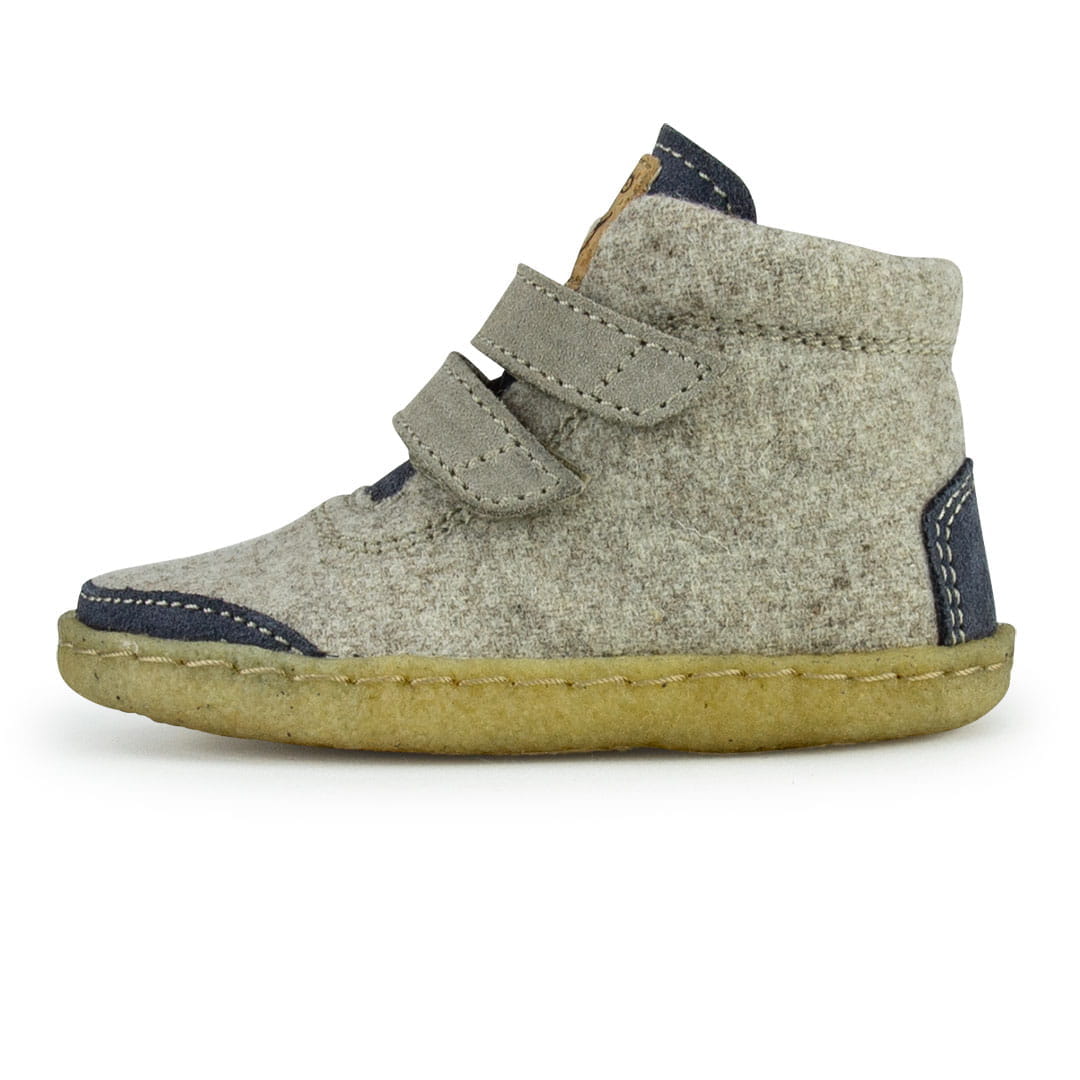
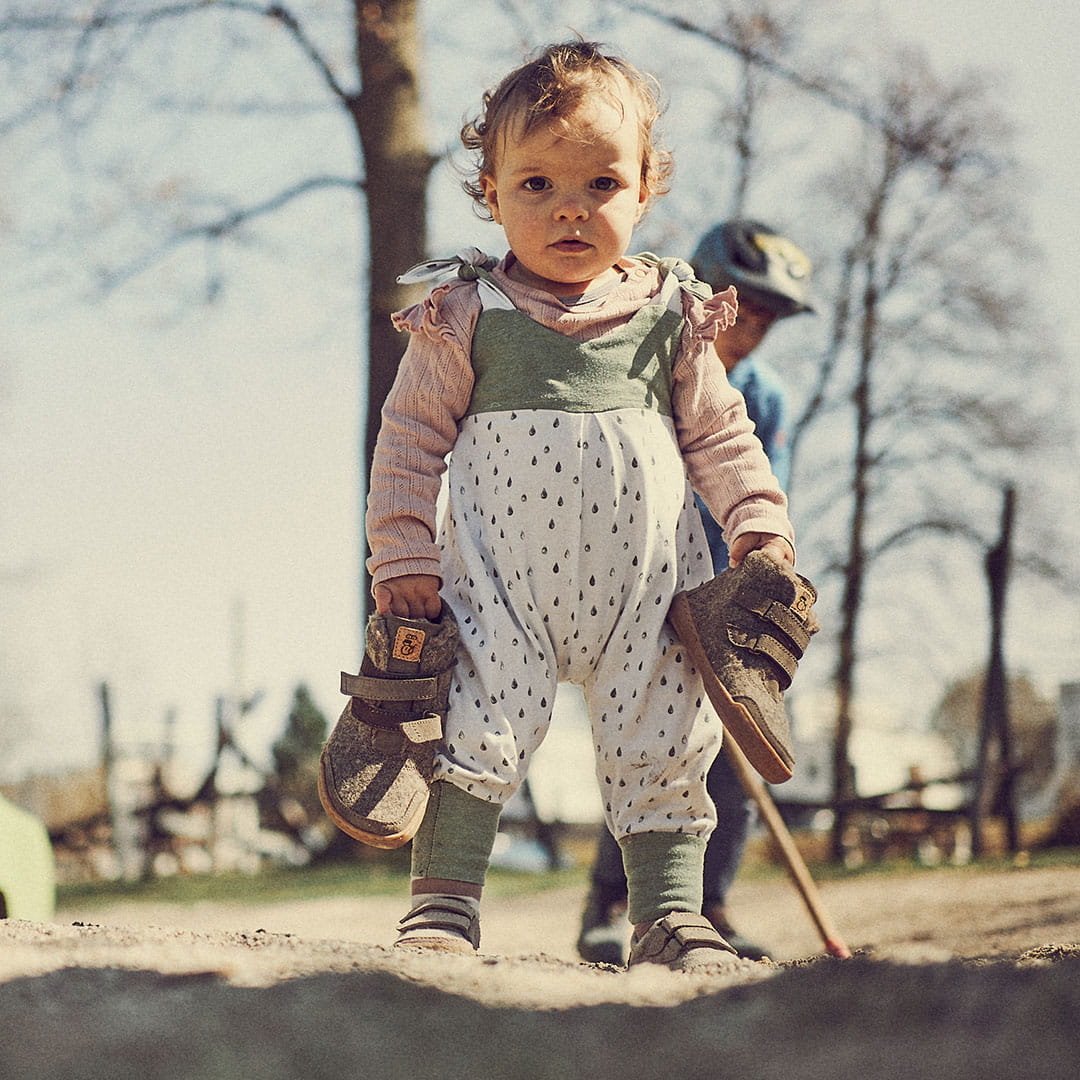
Toddlers usually learn to walk between 10 and 18 months. To be honest, we believe that children learn to walk best at home when they’re barefoot. However, if you’re out and about with your toddler, sustainable first walking shoes definitely make sense. Not only do they protect little feet, but they also provide a bit of stability. That’s why we use only natural materials for our first walking shoes, such as wool, cork and a sole made from 100% natural rubber.

First-step shoes – for those first steps

When do I need walking shoes for my child?
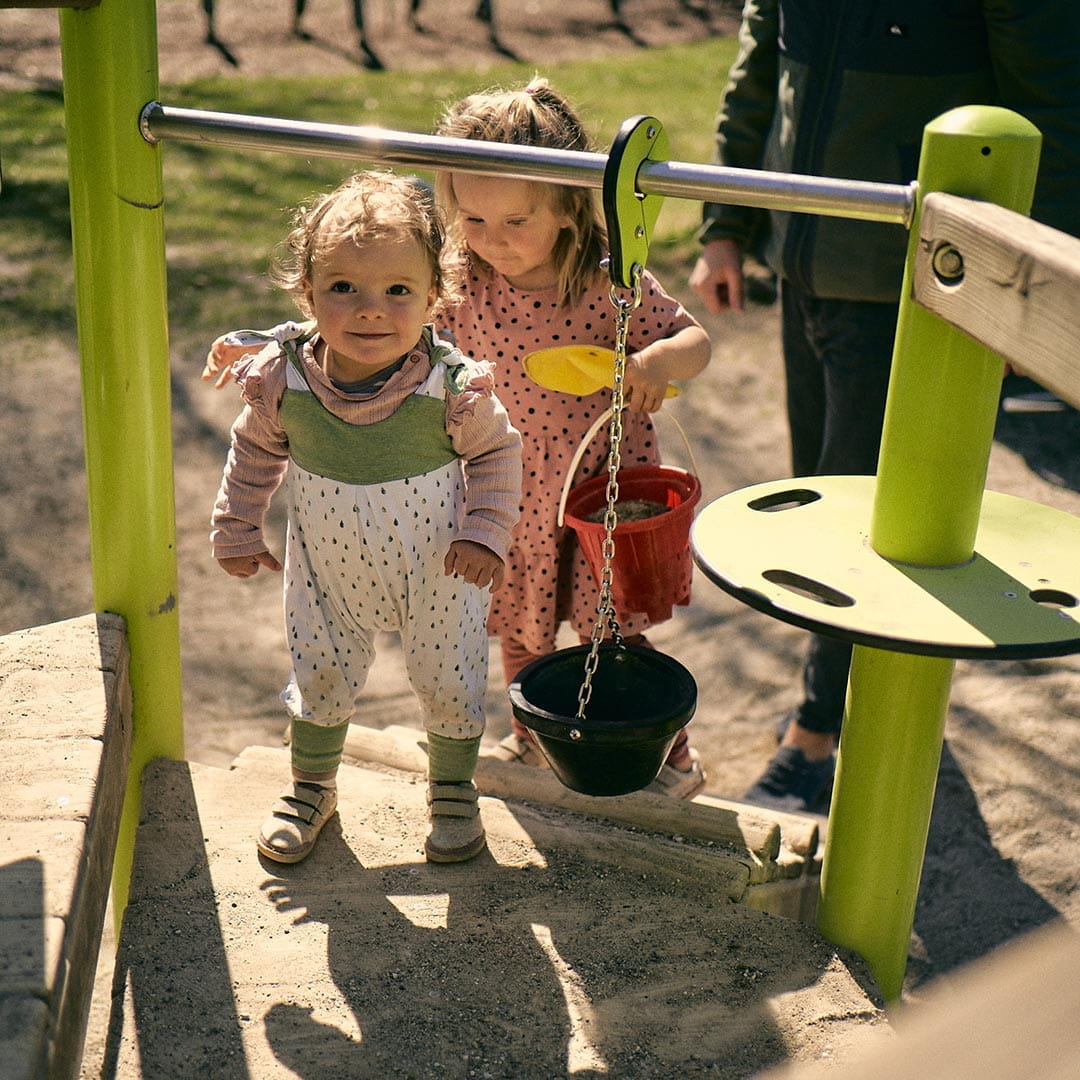
Durable first walking shoes make sense once your child is taking their first steps and you’re out and about, not just at home. These shoes protect little, delicate feet from sharp stones or dirt, as well as from the sun’s rays or getting cold. Children usually learn to walk between 10 and 18 months. From this point onwards, you should definitely have a pair of first-step shoes for your child at home. In our opinion, you should give your child the chance to take their first steps barefoot at home – this is the most natural way to walk – but when you head to the playground, into town or simply outside, you should definitely put walking shoes on your child.

What distinguishes first-step shoes from normal children’s shoes?
First-step shoes aren’t actually that different from children’s barefoot shoes, but the difference compared to normal children’s shoes is huge! We’d like to briefly show you what sets sustainable first-step shoes apart from conventional children’s shoes.
Sole:
- First-step shoes have a very soft and flexible sole.
- Conventional children’s shoes often have a firmer and thicker sole.
Construction:
- First-step shoes have no heel-to-toe drop, i.e. a flat sole.
- Conventional children’s shoes have a heel-to-toe drop, i.e. a difference in height between the heel and the toes.
Shape:
- First-step shoes follow the natural shape of the foot and have a wide toe box that provides ample space.
- Conventional children’s shoes often have a ‘modern’ shape and do not provide enough space for the toes.
Choice of materials:
- First-step shoes are usually made from natural and soft materials such as leather or wool.
- Conventional children’s shoes are frequently made from synthetic materials.
The differences do, of course, vary from one children’s shoe manufacturer to another. However, what is particularly important for sustainable first-step shoes is a flexible and thin sole, as well as a fit that suits children’s feet, with plenty of room in the toe box and a narrow heel for a secure hold.

What materials are the sustainable first-step shoes made from?
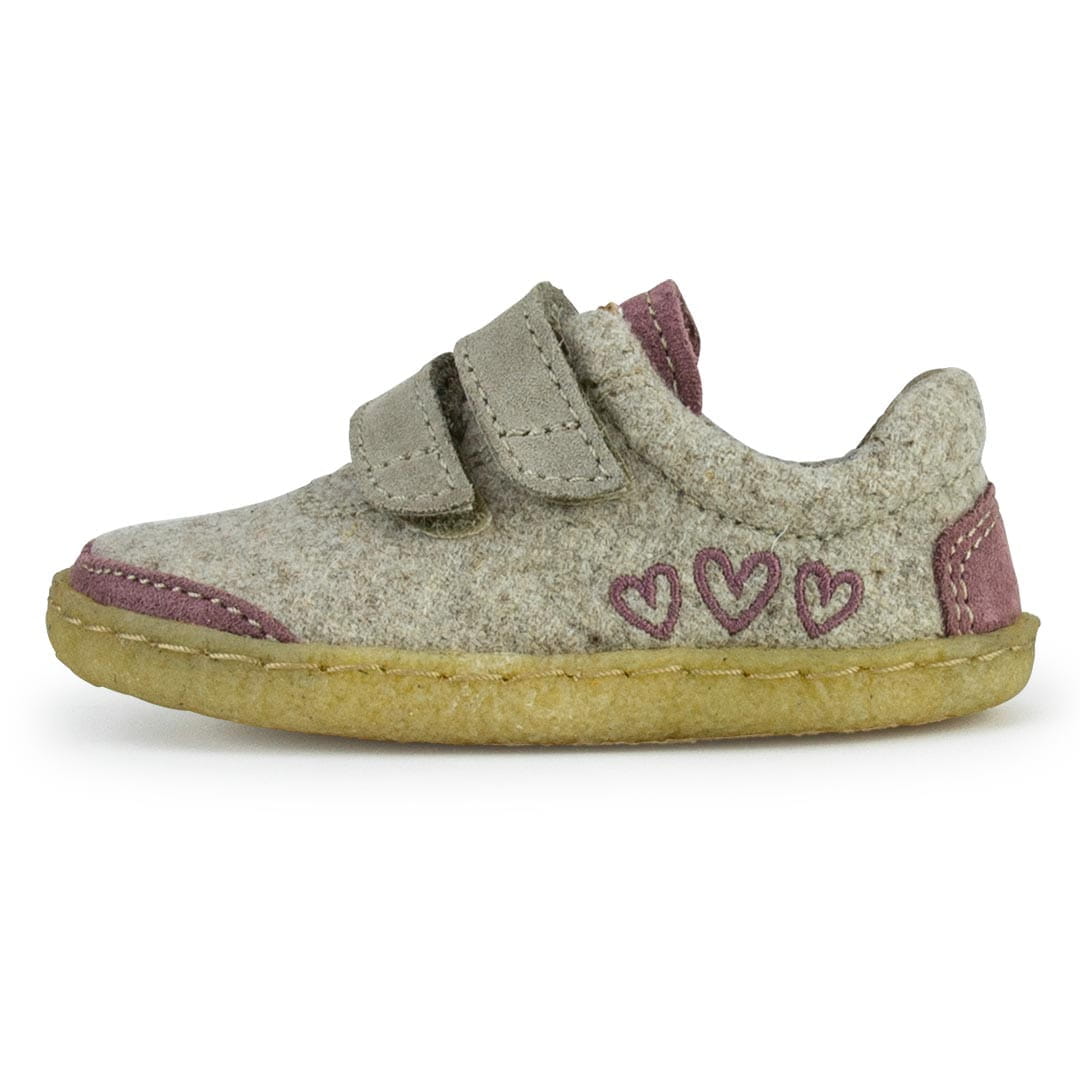
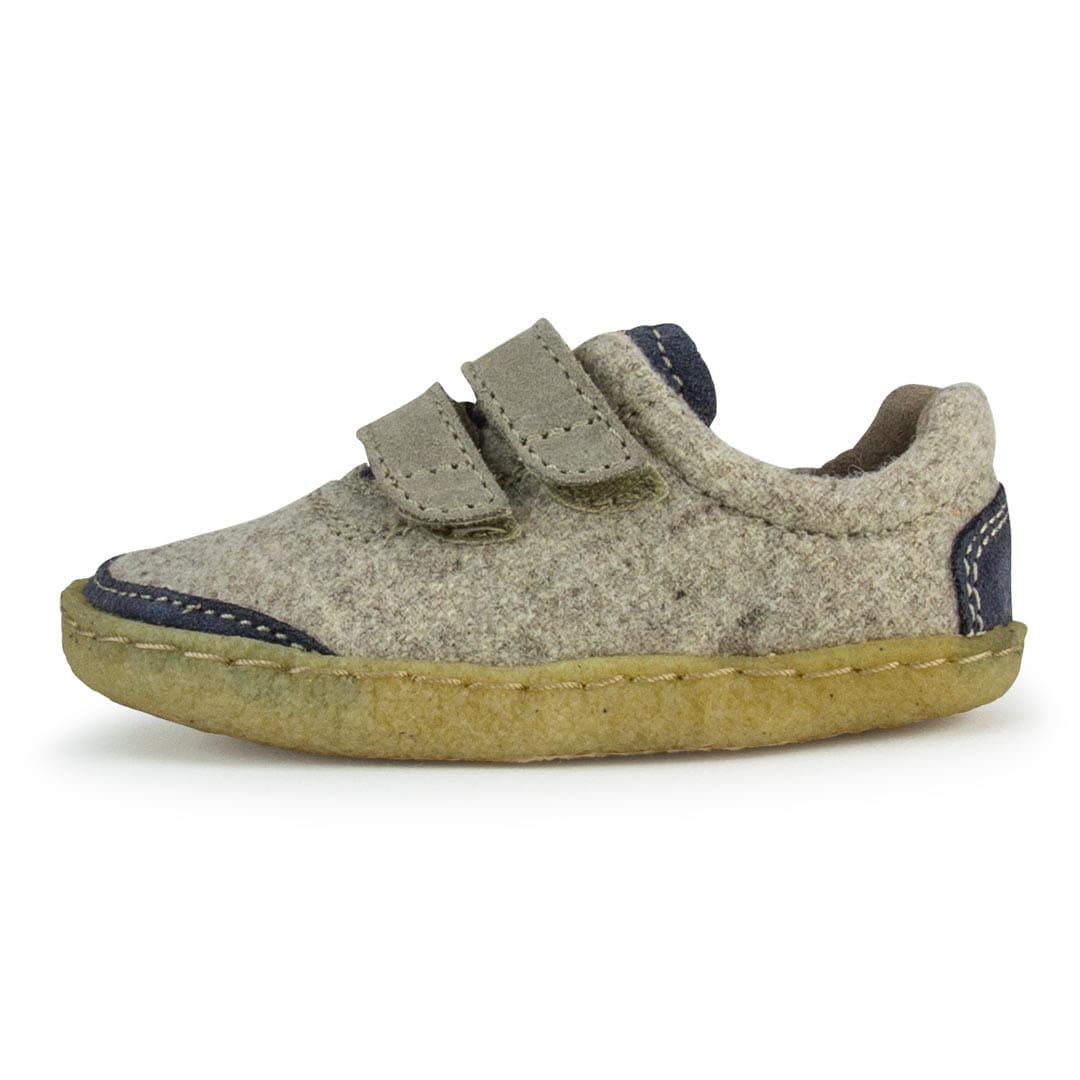
The choice of materials for our first-step shoes is particularly important to us. For this reason, just as with our children’s barefoot shoes, we rely on natural materials such as wool, cork and natural rubber. We firmly believe that we shouldn’t put our children’s delicate feet in synthetic materials. For example, the removable insole in our first walking shoes is made from recycled cork – a genuine natural material! For the upper and lining, we use genuine, undyed sheep’s wool from Portugal and Germany. The wool is processed into loden. As the sole is the most important component of first-step shoes, we use a sole made from 100% natural rubber (crepe sole), which is produced from the sap of rubber trees. The sole is particularly flexible and soft, and the great thing is that it becomes even softer thanks to your child’s body heat.
What should I look out for when buying sustainable first-step shoes?
When buying first-step shoes, you should pay particular attention to ensuring that the shoes and materials are flexible and soft. A first-step shoe with a stiff sole is not a proper first-step shoe. If the sole is nice and soft and flexible but the upper isn’t, then this model is also not recommended. As well as softness, you should also ensure you choose the correct size for sustainable first walking shoes, bearing in mind that toddlers’ feet can grow by up to three shoe sizes in a year. Therefore, never buy first walking shoes that are too small! Furthermore, the shape of first-step shoes is very important and should correspond to the natural shape of the foot. A first-step shoe with a pointed toe box definitely does not offer little children’s feet enough space to develop properly.
When should I switch from crawling shoes to first-step shoes?
It makes sense to switch from crawling shoes to first-step shoes when your child is no longer just taking their first steps at home, but when you’re also out and about with them. First-step shoes are designed to protect little feet whilst providing some stability. As a rule, toddlers start taking their first steps between 10 and 18 months. From this point onwards, it’s advisable to have suitable walking shoes at home. We know from our own experience just how quickly things progress from there ;-)
Do first-step shoes really make sense, or can my child learn to walk without shoes?
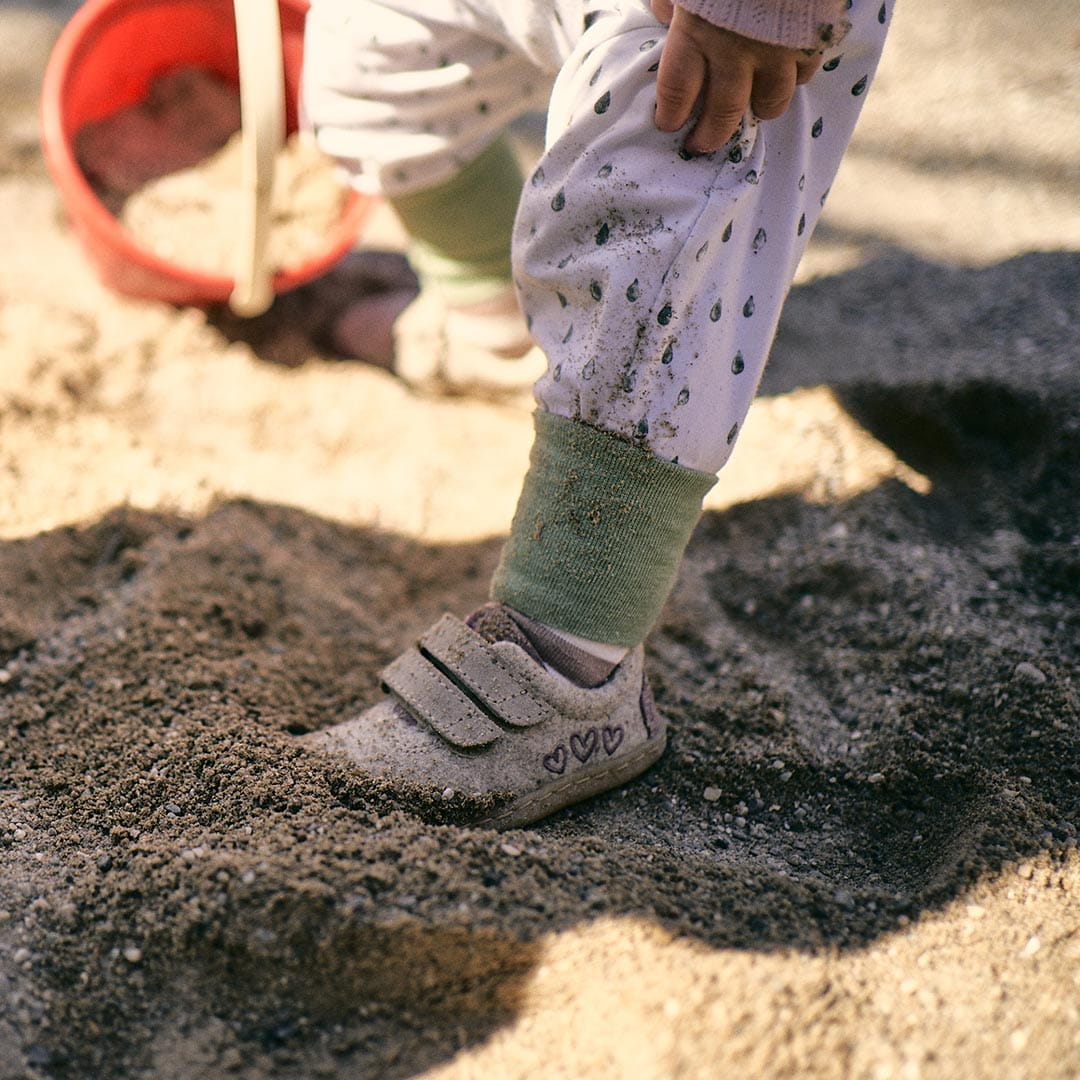
Baby walking shoes definitely make sense if you’re out and about with your child, not just at home but also outdoors. They not only offer little feet stability but also a certain amount of protection from the ground, as well as warmth and protection from the cold. We believe that children can take their first steps at home without baby walking shoes. This helps to strengthen the foot muscles, and if you watch young children, you’ll see that it’s an important developmental process for their feet to adapt to their new role of supporting their body weight. In a sense, first-step shoes expand little ones’ range of movement and make it possible for them to explore the world together with their parents – whilst wearing their sustainable barefoot shoes – even beyond the confines of their own home.